Can India keep feeding 140 crore people every day?Right now, everything looks normal.But problems like climate change and water shortage are growing fast. By 2030, the real question is — will food still be affordable for everyone?
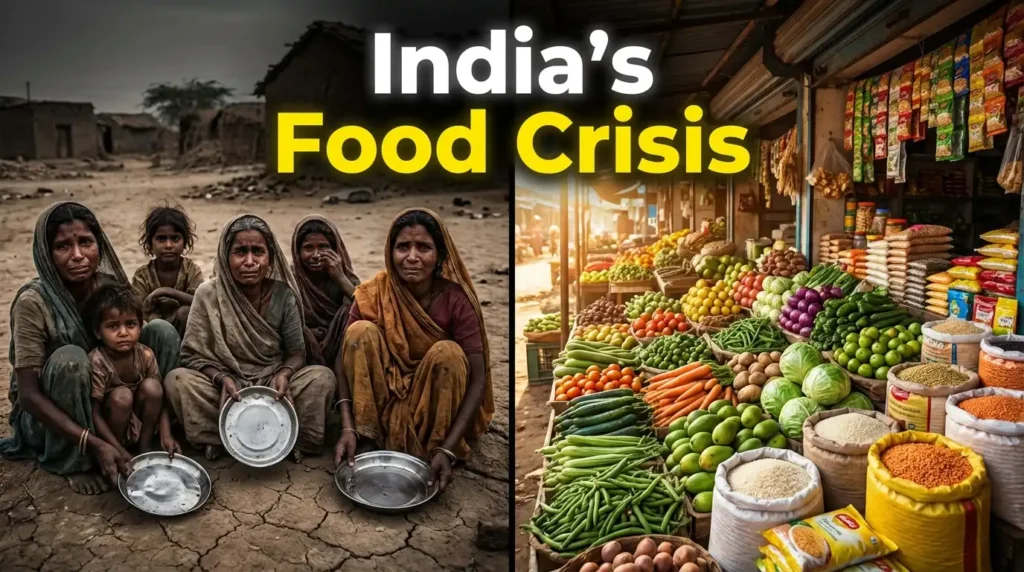
On paper, India looks like a food superpower.It is the world’s largest producer of milk, the second-largest producer of rice and wheat, and the top exporter of rice.In 2023–24, India produced around 330 million tonnes of foodgrain, according to the Ministry of Agriculture.
Government buffer stocks, managed by the Food Corporation of India, often hold over 60 million tonnes of wheat and rice. Yet the real question is: if everything looks strong on paper… why is the system under stress?
The real crisis is not about how much food India produces today.
It is about whether we can continue producing this much — as climate change worsens, water declines, soil degrades, and farmers begin to leave agriculture.
The warning signs are already visible.
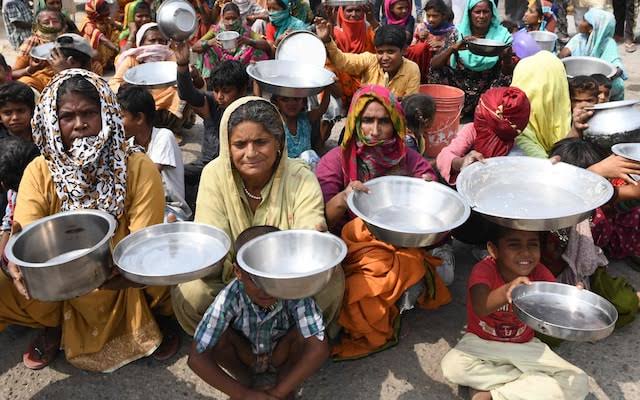
The Global Hunger Index 2023 ranked India 111 out of 125 countries.The NFHS-5 survey shows that 35% of children under five are stunted, meaning they lack proper nutrition during critical growth years.At the same time, 57% of women and nearly 67% of young children in India suffer from anemia.
This means the issue is not just food production — it is access, nutrition, and long-term sustainability.
In 2023, tomatoes touched ₹200 per kg, onions crossed ₹80, and tur dal stayed above ₹200 for months. Cooking oil prices also surged sharply.
The Foundation Is Cracking
India’s agriculture still supports nearly 42% of the workforce — around 22 crore people — yet contributes only about 18% to GDP. This imbalance reveals a deeper problem: the sector that feeds the nation is economically fragile and under pressure.
The entire food system stands on three pillars — land, water, and labor.And today, all three are weakening at the same time.
Water —the lifeline of agriculture — is quietly disappearing.Farming uses nearly 80% of India’s water, but the balance is breaking.Every year, far more groundwater is extracted than what nature can refill. The gap keeps growing.
Labor is walking away. Young Indians from farming families are increasingly refusing to farm. The average age of Indian farmers is rising because the next generation sees no future in agriculture. The system is not collapsing overnight —it is slowly weakening. The real question is: how far will this go by 2030?
Climate Change and Indian Farming
Indian farming once followed predictable seasons. Now, climate change has broken that pattern —making farming uncertain and risky.
Rising Heat — The Silent Crop Killer
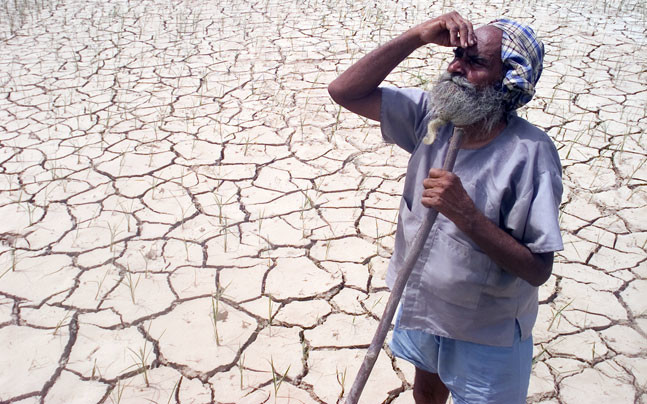
This impact is already visible on the ground.According to the Indian Agricultural Research Institute (IARI), for every 1°C rise in temperature, wheat yields drop by 4–6%.
India has already warmed by about 0.7°C, and further rise is expected by 2030. Even a small decline in yield means millions of tonnes of food lost.
Unpredictable Monsoon — Farmers Can’t Plan Anymore
The monsoon provides nearly 70% of India’s rainfall and supports over half of its farmland.For generations, farmers relied on stable patterns — but those patterns are now breaking.According to IMD data, rainfall is no longer consistent.
Floods and Droughts — The Double Crisis
India is now facing a new reality floods and droughts at the same time.In 2023, states like Himachal Pradesh and Uttarakhand faced massive floods causing damage worth thousands of crores,while Karnataka, Maharashtra, and Telangana struggled with drought — during the same monsoon.
According to IMD, extreme rainfall events have increased by 75% since 1950.But this rain doesn’t help farming — it destroys it.
Punjab produces about 20% of India’s wheat and 12% of its rice, yet it is facing a slow crisis.
The water table is falling by nearly 1 meter every year.
Farmers who once found water at 30 feet now drill 200–300 feet — sometimes without success.
Around 79% of districts are classified as over-exploited for groundwater.
Soil health is also declining. Studies show 30–40% loss in soil quality since the Green Revolution. By 2030, wheat yields could drop by 15–20%.
The Water–Food Connection
Water crisis and food crisis are not separate — they are the same problem. Every meal you eat is directly linked to water.
Agriculture’s Water Dependence
Agriculture uses nearly 80% of India’s total water.Growing food itself requires massive water:
Rice: 3,000–5,000 liters/kg
Wheat: 1,000–1,500 liters/kg
Sugarcane: 1,500–2,000 liters/kg
This means every plate of food carries thousands of liters of water behind it.As water supply shrinks,food production automatically declines.
The Groundwater Emergency
India uses 25% of global groundwater,but extracts far more than it can recharge — creating a huge deficit.Over 1,000 regions are over-exploited.Since 70% of farming depends on groundwater,falling water levels mean falling food production.
The Farmer — India’s Most Vulnerable Person
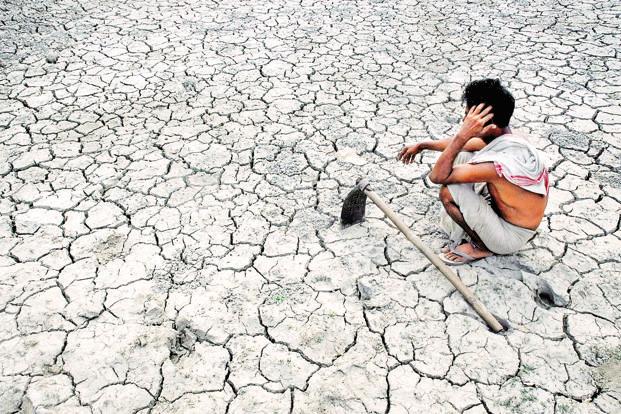
We proudly call the Indian farmer the “Annadata” — the provider of food. Yet, the person who feeds 1.4 billion people is statistically the most debt-ridden,economically fragile, and vulnerable individual in the country.
The Income Reality Nobody Talks About
The NSSO survey reveals a harsh truth —the average monthly income of an Indian farming family is just ₹10,218 (from all sources). For most small farmers (86% owning <2hectares),income often falls to ₹5,000–7,000 per month.
This is not just low income —
it shows farming itself is becoming economically unviable.
The Cost Trap Input costs — seeds, fertilizers, diesel, labor — have been rising 10–15% annually,but farmers still get very low prices for their produce.
For example, tomatoes can sell at ₹5/kg at the farm but reach ₹40/kg in cities.Onions may sell at ₹80 retail, while farmers get only ₹20–25.The result:costs are rising, but earnings are not.Many farmers operate with little to no profit —surviving on subsidies and unpaid family labor.
The Debt Spiral
Around 52% of farmers are in debt, averaging ₹74,000 per family. Most of it is survival debt, not profit-driven.With high-interest loans (24–36%),one failed crop can trap farmers in a cycle that’s hard to escape.
The Suicide Epidemic
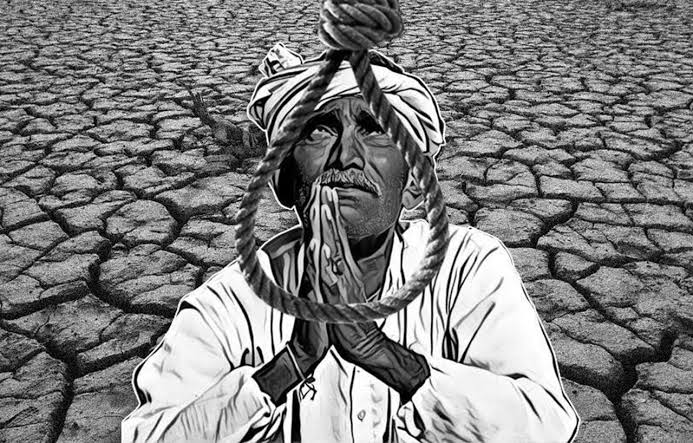
India records 10,000+ farmer suicides every year — 11,290 in 2022 (NCRB).States like Maharashtra, Karnataka, and Telangana are most affected.Around 70% cases come from rain-fed regions,where one failed monsoon can destroy livelihoods.
Your Kitchen in 2030 — What Will Food Cost?
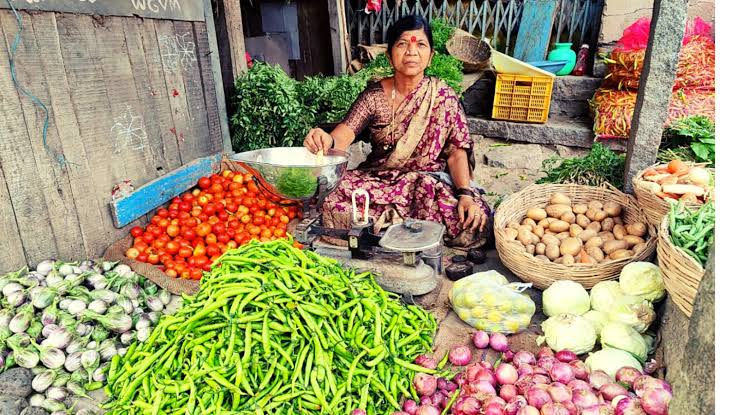
The crisis won’t stay in farms — it will reach your plate.By 2030, the real problem won’t be empty shelves, but food becoming too expensive for everyday life.
The Price Trajectory — Where Your Staples Are Heading
The data allows us to project with reasonable confidence what basic food items will cost by 2030 if current trends continue. These are not wild guesses. They are extrapolations based on current food inflation rates (8-10% annually according to RBI), climate impact studies on crop yields (IARI, IPCC), and global commodity price trends.
- Atta & Rice: ₹40–50 → around ₹60–75/kg
•Dal: ₹120–150 → around ₹170–220/kg
•Cooking Oil: ₹140–180 → around ₹180–240/litre
•Milk: ₹55–65 → around ₹70–95/litre
•Vegetables: ₹40–60 → around ₹60–90/kg (with occasional spikes)
monthly food costs may rise by ~20–40%,putting pressure on household budgets.
Monthly Budget Impact
A normal family’s food budget may rise from ₹10–12k to around ₹14–17k by 2030. Lower-income families will feel the pressure more,as a bigger part of income will go only to food.
The Hidden Inflation — What You Don’t See
Food inflation is not always visible in price tags. It also happens through shrinkflation — same price, less quantity.
A 1 kg pack becomes 900g, a ₹20 product becomes smaller, but price stays.At the same time, quality drops. Cheaper ingredients, dilution, and adulteration increase.
Who Gets Hit Hardest
Daily wage laborers whose income remains fixed while food costs rise face the sharpest impact. A construction worker earning ₹500-600 daily cannot negotiate higher wages just because dal costs more.
Senior citizens on fixed pensions of ₹8,000-12,000 monthly will see food inflation consume any savings buffer they had.Students living in cities on tight budgets will face sudden pressure. The hostel or PG that provided meals for ₹4,000 monthly will charge ₹6,500-7,000 — with no corresponding increase in student scholarships or family support.
When the World Hits India’s Food
India grows its own food, but prices are shaped by global events.
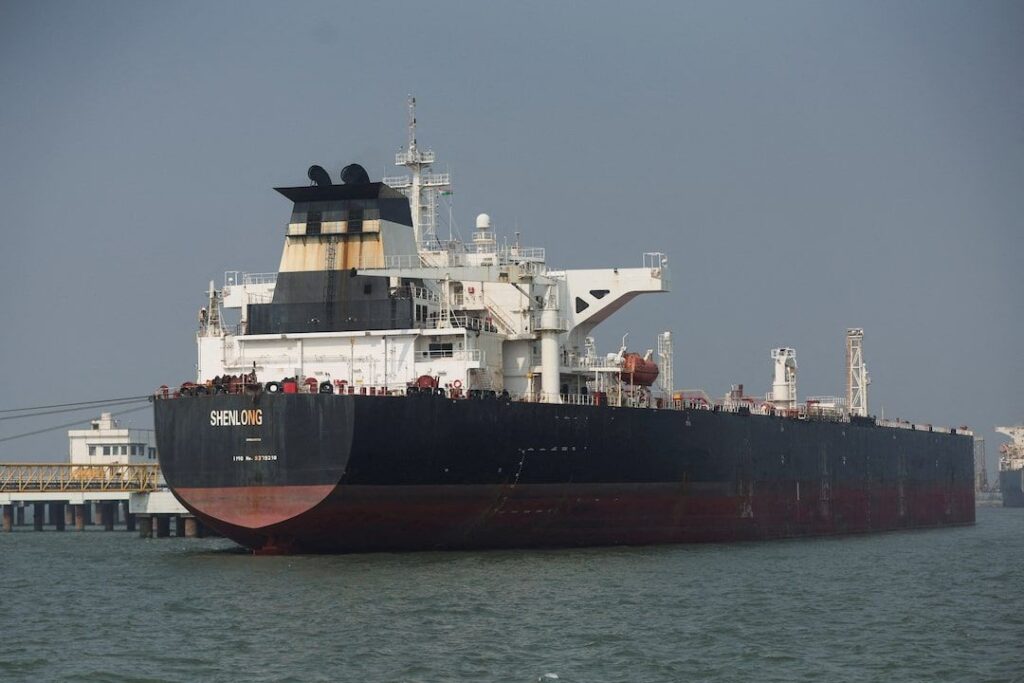
The Russia–Ukraine war (2022) disrupted wheat and fertilizer supply,pushing global prices up 40–50% and raising farming costs in India.India depends on imports for key fertilizers, so global conflicts directly hit farmers’ expenses and food prices.
By 2030, such global shocks could become more frequent —and every crisis abroad will be felt in Indian kitchens.
Iran–Israel Conflict
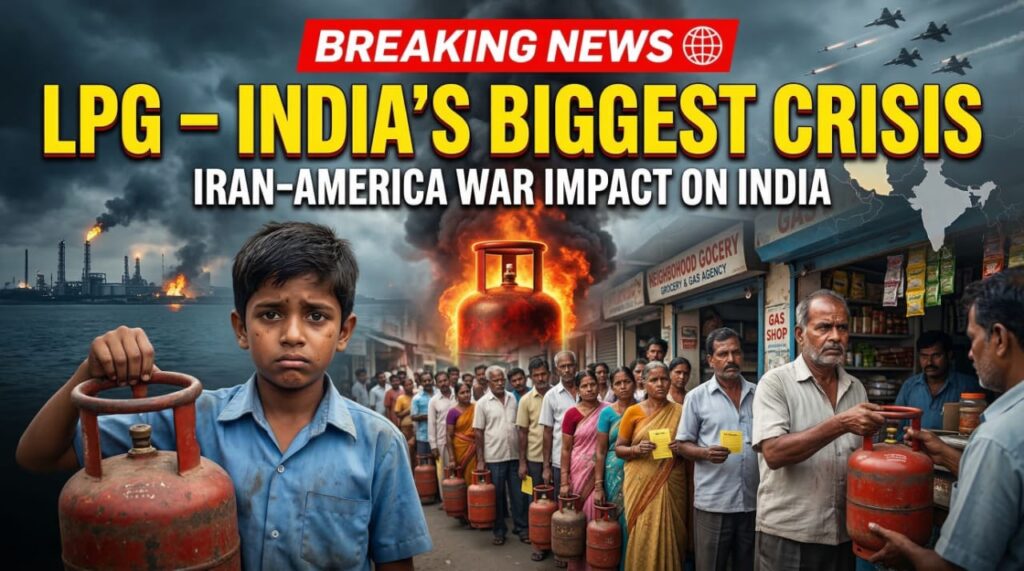
The ongoing conflict between Iran, Israel, and the United States has turned the Strait of Hormuz into a global choke point — and India is directly exposed Around 20% of the world’s oil, 30% of fertilizer trade, and large volumes of gas pass through this narrow route. With Iran restricting movement, global supply chains are already disrupted.
For India, the biggest danger is not just fuel — it is fertilizer and food production.India faces 20–25% risk to fertilizer imports due to this disruption.
Fertilizer prices have already risen sharply (up to 40%+), increasing farming costs globally.
India imports a major share of LPG and fertilizers from the Gulf, making it highly vulnerable.
As a result: Farmers may use less fertilizer → crop yields fall
Production drops → food prices rise.Reports already show fertilizer shortages creating panic among farmers in India, with fears of lower yields in upcoming seasons.
The chain reaction is clear: war → oil & fertilizer crisis → higher farming cost → lower output → expensive food
By 2030, if such conflicts continue, India’s food system will not just face pressure —it could face repeated shocks affecting every household’s grocery bill.
Supply Chain Fragility
India already loses 30–40% of fruits and vegetables due to poor storage, transport, and cold chain gaps.So even when farms produce enough, food still gets wasted — and prices rise.When global disruptions hit (fuel costs, wars, pandemics), logistics become expensive, and food prices increase further.By 2030, such disruptions will only grow —and every shock in the world will be felt on your plate.
Will India Run Out of Food by 2030?
The honest answer is no — India won’t run out of food completely.
But the real crisis will be affordability.Food will be available, but prices may rise so much that millions won’t afford a proper diet.
To avoid this, India needs urgent, large-scale action — not small fixes.
What India Must Do (Policy Level)
Water Reform:India extracts 100 billion cubic meters more groundwater than it recharges.
Only 10–12% farmland uses drip irrigation, while it can save up to 50–60% water.Scaling it to 40–50% by 2030 can massively improve water efficiency.
Crop Diversification:States like Punjab-Haryana must reduce water-heavy crops.Shift toward millets, pulses, oilseeds.MSP should reward water-efficient farming, not just production.
Key Reforms Needed
Cold Chain Infrastructure:India loses 30–40% of produce due to poor storage. Better cold chains can increase food supply without growing more.
Farmer Income Security:Ensure fair prices, direct selling, and effective insurance.Without stable income,farmers will leave — and the food system will weaken.
What Technology Can Do
AI and sensors can guide farmers on exact water, fertilizer, and pesticide use,reducing waste and increasing yield.New drought-resistant seeds and methods like vertical farming (using up to 90% less water) can boost production, even in cities.
Countries like Israel and the Netherlands prove this works.
India can do it too — if innovation is scaled, not just tested.
What You Must Do (Personally)
Reduce food waste —households waste 50–70 kg per person yearly.
Support local farmers — buy directly when possible.
Grow small food at home — even basic kitchen gardening helps. Plan for higher food costs — choose seasonal, local foods.
Small actions at home can make a big difference in the long run.
The Hard Truth
India can still feed its population by 2030 — but only with urgent, large-scale transformation.
Without action, the risk is not lack of food, but a system failure in producing and distributing it.
Dr. M.S. Swaminathan, the father of India’s Green Revolution, once said: “If agriculture goes wrong, nothing else will have a chance to go right.” By 2030, India will learn whether it heeded that warning — or ignored it until it was too late. The solutions exist —the real question is: will India act in time?
- Is the Dollar Dying? Why the World Is Ditching the US Currency — A Deep Analysis
 For nearly 80 years, the US dollar has powered the global economy — from oil trade to international deals.But in 2026, something is changing.Countries are slowly losing confidence in this system, and the data is starting to reflect it. Let’s understand what the dollar system really is —… Read more: Is the Dollar Dying? Why the World Is Ditching the US Currency — A Deep Analysis
 - Is India Heading Toward a Food Crisis by 2030?Can India keep feeding 140 crore people every day?Right now, everything looks normal.But problems like climate change and water shortage are growing fast. By 2030, the real question is — will food still be affordable for everyone? On paper, India looks like a food superpower.It is the world’s… Read more: Is India Heading Toward a Food Crisis by 2030?
- 100 Million Jobs in Danger? India’s AI Future ExplainedIn November 2022, ChatGPT crossed 100 million users in just 2 months.Since then, AI is growing at a rapid pace. By 2030, up to 100 million jobs in India could be at risk.The real question is — could yours be next? What AI Really Is (Not What You… Read more: 100 Million Jobs in Danger? India’s AI Future Explained
- Climate Change 2030: What Will Happen to Your Life in India?India is no longer waiting for climate change to arrive. It is already here.You can feel it in the air, in the water shortages, and even in the rising cost of food.What once sounded like a distant scientific warning is now becoming a part of everyday life for… Read more: Climate Change 2030: What Will Happen to Your Life in India?
- Water Crisis 2030: How India Is Quietly Running Out of WaterToday, we open the TV or scroll through news on our phones every day…and everywhere we hear the same kind of headlines—sometimes India-Pakistan tensions, sometimes wars, and sometimes political turmoil.But amidst all this noise, there is a crisis that is silently growing—India’s water crisis.According to a report by… Read more: Water Crisis 2030: How India Is Quietly Running Out of Water
- Why Does America Always Stand With Israel? The Real Reasons Nobody Tells YouFebruary 28,2026 When the United States and Israel launched a joint attack against Iran, it was not just a military operation—it was a clear message to the world:“Israel’s security is America’s own security.”But this is where the real question begins—Why is a global superpower willing to risk so… Read more: Why Does America Always Stand With Israel? The Real Reasons Nobody Tells You