
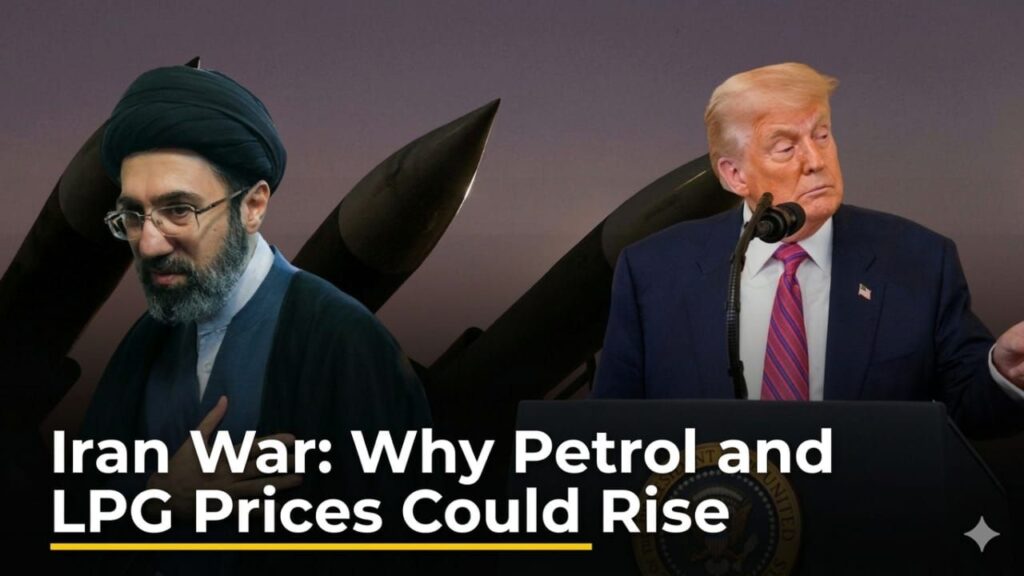
The war between the United States and Iran has now crossed two weeks, and its ripple effects are no longer confined to the Middle East.
Rising fears over fuel supply are beginning to surface worldwide. But the bigger question is—has this conflict already started affecting petrol and LPG availability in your area? Let’s take a closer look.
How the Iran War Is Turning Into an Energy Crisis
The devastation unfolding across the Middle East today began with a major shock. On February 28, 2026, a powerful attack reportedly killed Iran’s Supreme Leader, Ali Khamenei. Soon afterward, in March 2026, Iran’s Assembly of Experts declared his 56-year-old son, Mojtaba Khamenei, as his successor.
Mojtaba is widely regarded as even more conservative and strategically assertive than his father. During the Iran–Iraq war, he is said to have worked closely with the Islamic Revolutionary Guard Corps, and over the decades he has developed strong influence within Iran’s security establishment. Under his leadership, Iran is now confronting the United States and Israel with a level of aggression many analysts describe as unprecedented.
When the War Began Targeting the Global Economy
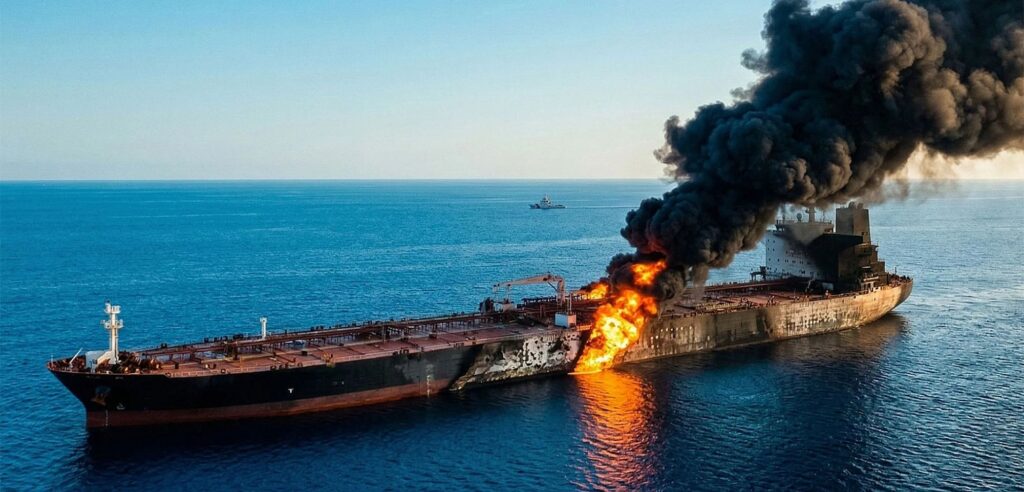
This conflict is no longer confined to military installations. Under Mojtaba’s leadership, Iran’s strategy increasingly targets the global economy itself.
One striking example came when drones reportedly struck the Ras Tanura refinery operated by Saudi Aramco, forcing operations to halt. The scale of this company is enormous: Saudi Aramco’s market capitalization stands around $1.7 trillion, and the firm alone accounts for roughly 12% of global crude oil production. Now even its largest facilities are facing direct threats.
The Strait of Hormuz Crisis
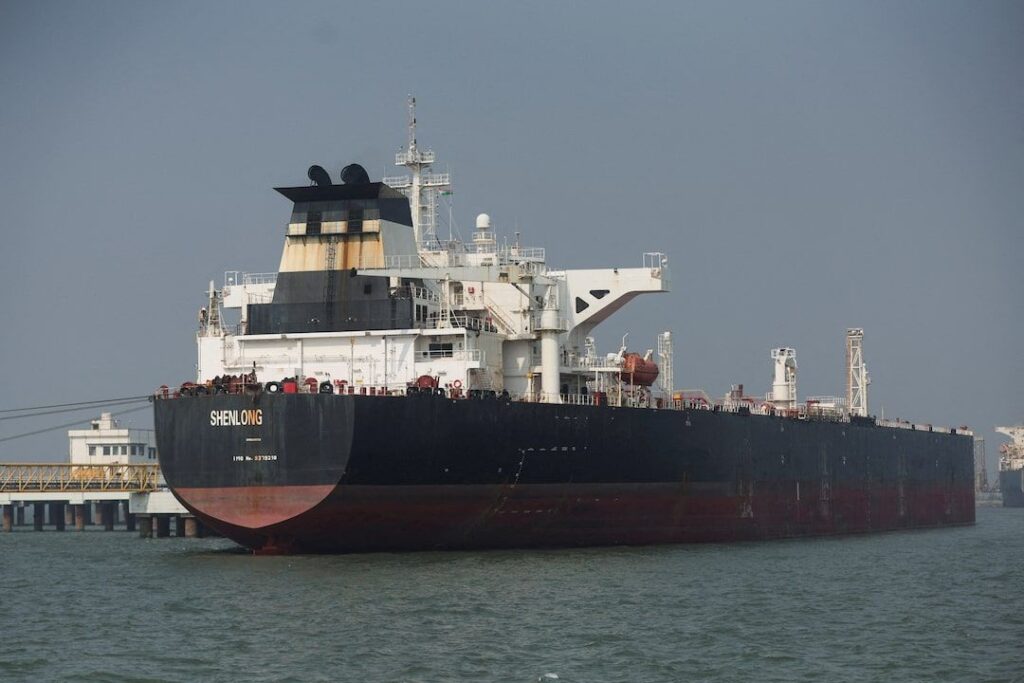
At the same time, Iran has begun detaining oil tankers moving through the Strait of Hormuz, including vessels carrying supplies destined for India.
As ships are delayed, war-risk insurance costs for oil companies have surged almost overnight, increasing the cost of transporting oil across global markets.
- Why India Is Already Feeling the Impact
The consequences are no longer limited to the Middle East. In India, the impact is already becoming visible.
Rumours about shortages of LPG cooking gas have started circulating, and reports from states such as Maharashtra suggest that several hotels have struggled to operate as commercial gas prices rise.
So how could this distant conflict push up the prices of everyday goods in your life?
Let’s take a deeper look.
India’s Energy Vulnerability
The 21-Nautical-Mile Chokepoint That Carries the World’s Oil
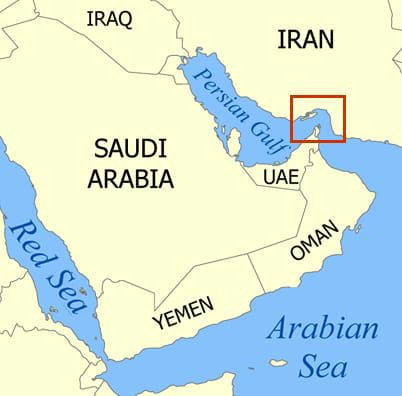
The Strait of Hormuz is only about 21 nautical miles wide, but it is one of the most critical energy corridors on the planet. According to data from the U.S. Energy Information Administration, before the recent escalation nearly 20 million barrels of oil passed through this route every day, accounting for roughly 20% of global petroleum consumption.
Because of the ongoing conflict and rising security risks, this narrow passage has now become one of the most dangerous maritime zones in the world. Recent ground reports cited by international media suggest that commercial traffic through the strait has sharply declined. Ships are moving with extreme caution as the threat of naval mines, drone strikes and military escalation continues to grow.
Western intelligence assessments indicate that Iran still possesses a large portion of its mine-laying naval capabilities, which could be used to deploy sea mines across key shipping lanes. The risk has pushed war-risk insurance premiums for vessels to extremely high levels, making shipping through the region far more expensive.
Iran has also issued strong warnings regarding the use of the strait. Officials have suggested that if the conflict escalates further, oil flows through this corridor could be severely restricted—raising fears of a major global energy shock.
Why This Crisis Matters for India
For India, the stakes are particularly high. According to data from the Petroleum Planning and Analysis Cell, the country imports more than 85% of its crude oil requirements, amounting to roughly 4.2 million barrels per day.
More than half of these imports come from the Middle East, meaning that any disruption in the region’s energy routes can directly affect India’s fuel supply and economic stability.
At present, international crude prices are hovering around $120 per barrel. In India’s energy economics, there is a commonly cited rule of thumb: every $10 increase in global crude prices can raise domestic petrol and diesel prices by around ₹5 per litre. If oil prices rise sharply during a prolonged crisis, the impact could eventually reach consumers.
While fuel companies often absorb short-term fluctuations, a longer disruption in supply could force price adjustments. That means higher fuel bills for transportation, logistics and households across the country.
Not Just Petrol — Cooking Gas Is Also at Risk
The impact of the crisis is not limited to vehicle fuel. India also imports around half of its natural gas and a large share of LPG cooking gas from Middle Eastern suppliers such as Qatar and United Arab Emirates.
If supply chains from the region slow down because of conflict or shipping disruptions, the effects could quickly spread beyond petrol pumps. Reduced supply would mean tighter availability of LPG cylinders and potentially higher prices.
The Domino Effect on Your Plate
The conflict is no longer just about oil fields or shipping lanes. If the war continues for several months, it could trigger a dangerous chain reaction in the economy. The sequence is simple but powerful:
Higher crude oil prices → Costlier diesel → Expensive transportation → Higher prices for everyday food and goods.
The Delivery Shock
India’s supply system is heavily dependent on road transport. Nearly 70% of freight movement in the country happens through trucks that run on diesel. When diesel prices rise, the cost of moving goods across the country increases almost immediately.
Logistics analysts and rating agencies such as CRISIL estimate that a ₹5–₹10 rise in diesel prices can increase trucking costs by about 12–15%. When transportation becomes expensive, the effect spreads quickly through the supply chain.
E-commerce companies, courier services and last-mile delivery networks are usually the first to feel the pressure. But eventually the higher transport cost gets passed on to consumers in the form of higher product prices.
- The Risk to Cooking Gas Supply
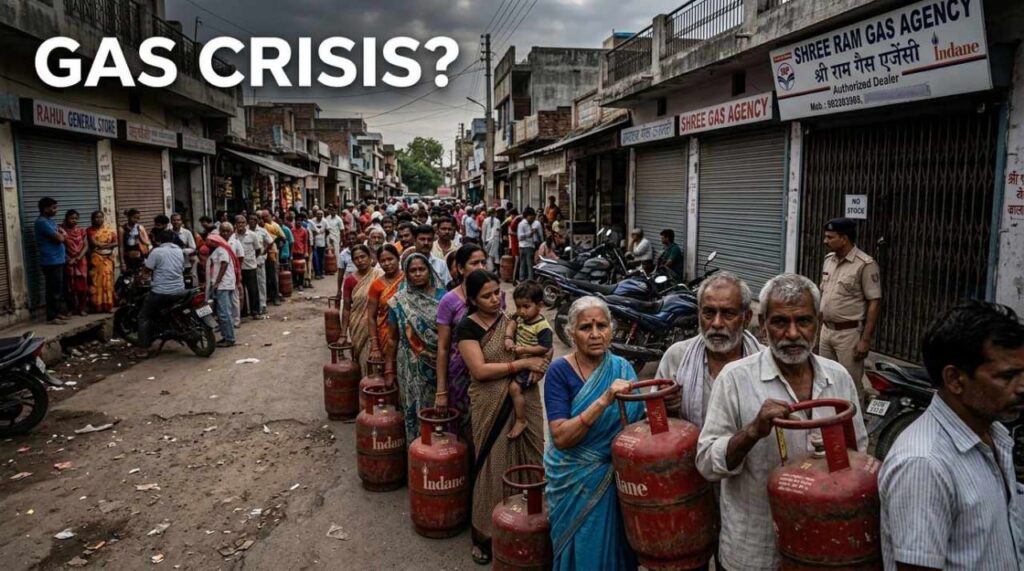
Another area of concern is LPG cooking gas. India imports more than half of its LPG requirement, much of it from Gulf countries such as Qatar and United Arab Emirates.
If shipping routes become unstable or supply chains slow down because of the conflict, the availability of LPG cylinders could tighten. Reports from major urban centres—including parts of Maharashtra such as the Mumbai–Pune belt, as well as Delhi and cities in Uttar Pradesh—have already mentioned pressure on commercial gas supply and rising prices.
While authorities have dismissed widespread shortages as speculation, there are indications that commercial LPG cylinder prices in some areas have increased by around ₹100–₹150, reflecting supply uncertainty.
A Possible Challenge for the Middle Class
If tensions in the Strait of Hormuz continue for two to three more months, the ripple effects could become much more visible in everyday life.
Higher fuel and transportation costs would affect multiple sectors of the economy. Fast-moving consumer goods (FMCG), dairy products, pulses and fresh vegetables could all become more expensive as logistics costs rise.
In practical terms, this means that a prolonged conflict could gradually push up the prices of many everyday essentials. For millions of middle-class households, the economic impact would not be felt on distant battlefields—but in grocery bills, delivery charges and kitchen budgets.
Lessons From the Past and the Road Ahead
(History’s Lessons and the Path Ahead for India)
The use of the Strait of Hormuz as a geopolitical weapon is not new. History shows that whenever tensions rise in the Middle East, this narrow sea passage becomes the first pressure point. The reason is simple: most of the oil exported by countries such as Saudi Arabia, Iraq, Kuwait and United Arab Emirates travels through this single maritime chokepoint before reaching global markets.
The Tanker War of the 1980s
During the Iran–Iraq war between 1980 and 1988, the Persian Gulf witnessed what later came to be known as the “Tanker War.” Both sides targeted oil shipments in an attempt to damage each other’s export revenues.
More than 400 commercial vessels and oil tankers were attacked during the conflict. The disruption created panic in global energy markets and affected oil-importing economies around the world. For India, which was then a developing economy heavily dependent on imports, it became an early example of how geopolitical tensions in the Middle East could translate into higher fuel costs and imported inflation.
The 1990 Gulf War and India’s Economic Crisis
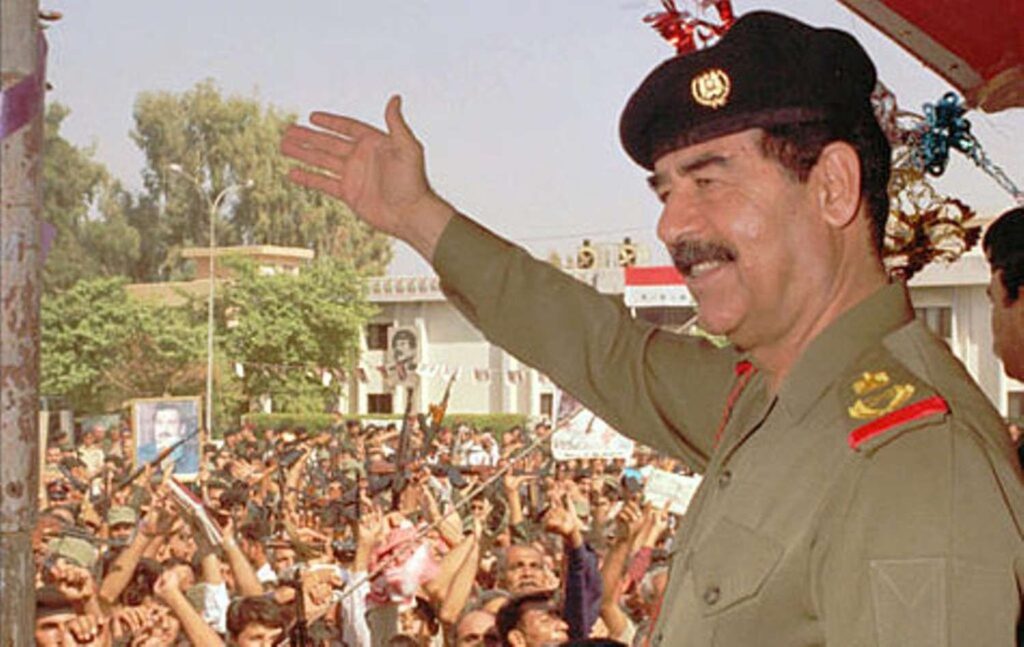
A decade later, the Middle East once again triggered a global energy shock. When Iraqi leader Saddam Hussein invaded Kuwait in 1990, oil prices surged rapidly—from around $15 to nearly $40 per barrel within a short period.
For India, the consequences were severe. The country’s foreign exchange reserves fell sharply, leaving enough funds to cover barely two weeks of imports. This crisis led to the historic 1991 Balance of Payments crisis, forcing India to pledge about 47 tonnes of gold to international banks to secure emergency financial assistance.
The economic shock ultimately pushed India toward major economic reforms and the beginning of its liberalization era.
The 2003 Iraq War
Another reminder of how geopolitical conflicts influence energy markets came in 2003, when the United States launched military operations in Iraq. The conflict created uncertainty in oil supply, and global crude prices climbed from roughly $25 to over $55 per barrel.
For Indian consumers, this period marked a time when rising international oil prices began to be felt more directly at petrol pumps. The growing middle class started experiencing the impact of global oil volatility in the form of frequent fuel price hikes.
The 2008 Oil Shock
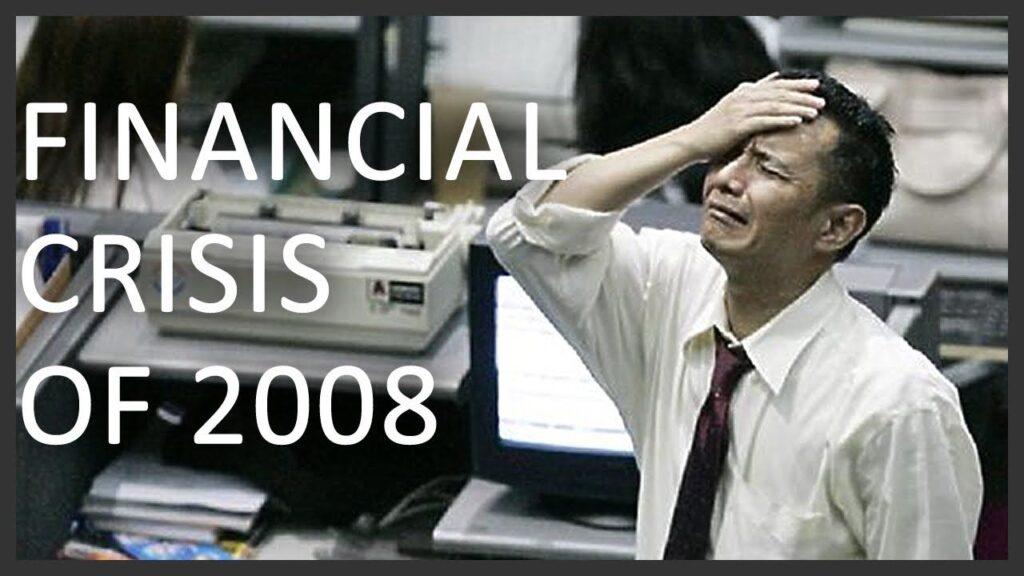
Just before the global financial crisis of 2008, crude oil prices reached an all-time high of $147 per barrel. At the same time that the world economy was slowing down, the surge in energy prices pushed inflation higher in many countries.
In India, this double shock—financial uncertainty combined with expensive oil—drove inflation into double-digit territory, affecting both economic growth and household budgets.
What India Is Doing to Manage the Crisis
- (How India Is Managing the Crisis — and Why There Is No Immediate Reason to Panic)
It is true that rising tensions in the Strait of Hormuz pose a serious risk to India’s energy security. However, the reassuring part is that the Indian government has already begun working in what officials describe as a “war-mode” approach to cushion the impact. Several strategic measures are helping prevent the crisis from immediately affecting ordinary citizens.
Russia — India’s Key Energy Lifeline
One of the most important strategies has been India’s decision to diversify its oil imports. Since the outbreak of the Ukraine conflict, India has significantly increased purchases of discounted crude from Russia.
According to global maritime data provider Kpler, India continued importing around 1.16 million barrels per day of Russian crude in early 2026. This supply has become a crucial buffer against disruptions in Middle Eastern oil routes.
Even amid geopolitical pressure and sanctions, Russian crude has provided Indian refiners with a relatively stable and affordable source of energy, helping reduce the impact of global supply shocks.
•Strategic Petroleum Reserves
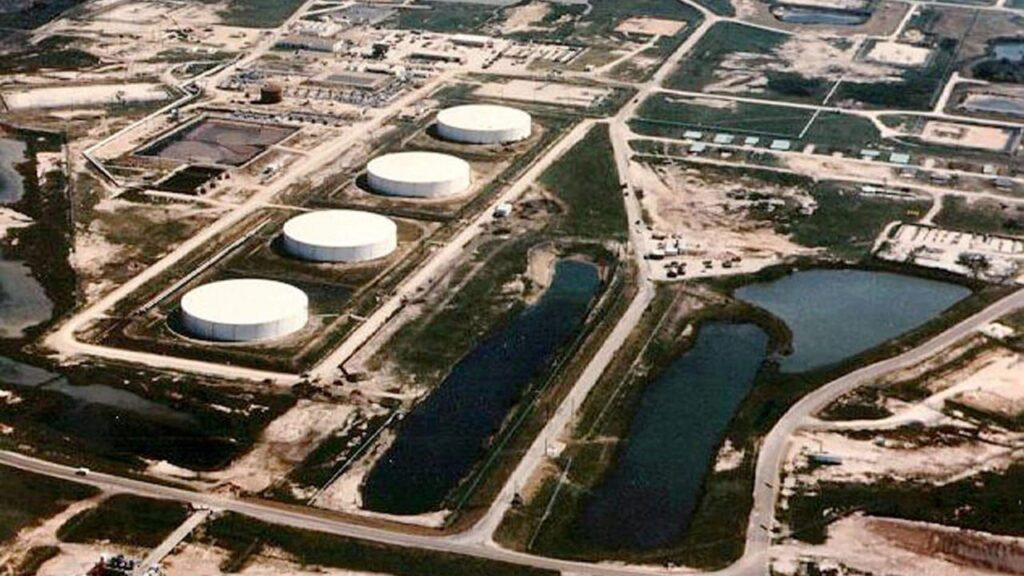
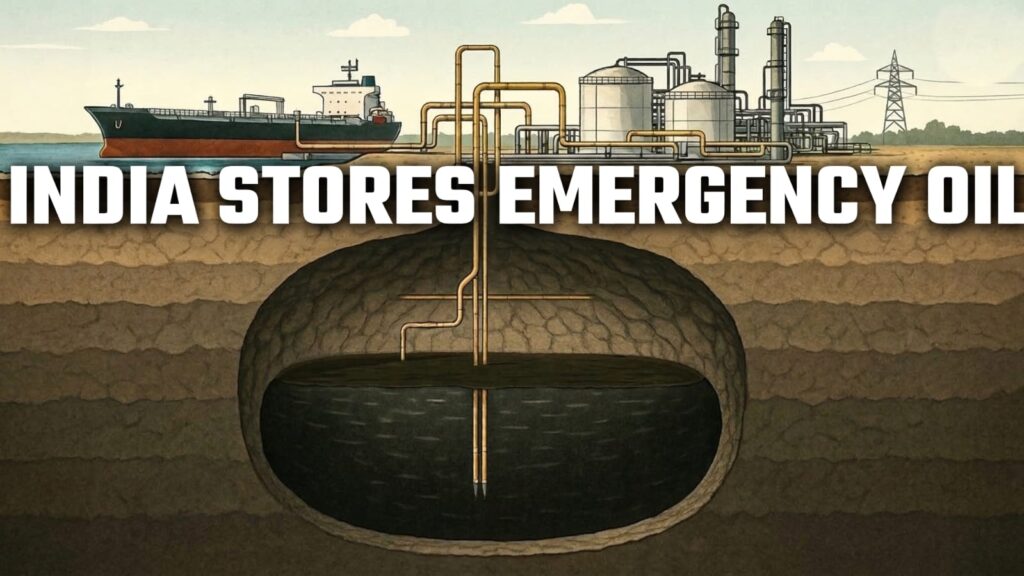
India also maintains emergency oil reserves designed specifically for crisis situations. These Strategic Petroleum Reserves (SPR) are stored in underground rock caverns at locations such as:
•Visakhapatnam
•Mangaluru
•Padur
According to India’s petroleum minister Hardeep Singh Puri, the country’s combined reserves—including strategic stocks and oil held by marketing companies—are sufficient for about 74 days of consumption even if imports were temporarily disrupted.
The minister also reassured the public that energy imports are continuing through alternative shipping routes outside the Strait of Hormuz, ensuring that domestic supply remains stable.
Domestic Alternatives and the Ethanol Blending Programme
India is not dependent only on imports. The country has been rapidly expanding its E20 programme, under which petrol is blended with 20% ethanol. Ethanol is produced from sugarcane and agricultural residues generated by farmers. This domestic blending initiative has already helped India save billions of dollars in crude oil imports and has reduced the country’s dependence on imported oil by a significant margin.
Because of these measures, the impact of the ongoing conflict may still be felt, but India’s current level of preparedness suggests that even if the war continues for several months, a severe crisis like the one experienced in 1991 is unlikely to repeat.
What do you think about this situation? Share your thoughts in the comments.
And if you want to understand why this intense conflict between Israel, the United States and Iran began—and the decades-long story behind it—be sure to read our related article below.
very good bro i support you
Goo
All clear