
For nearly 80 years, the US dollar has powered the global economy — from oil trade to international deals.But in 2026, something is changing.Countries are slowly losing confidence in this system, and the data is starting to reflect it. Let’s understand what the dollar system really is — and why its grip is weakening.
What Is the Dollar System?
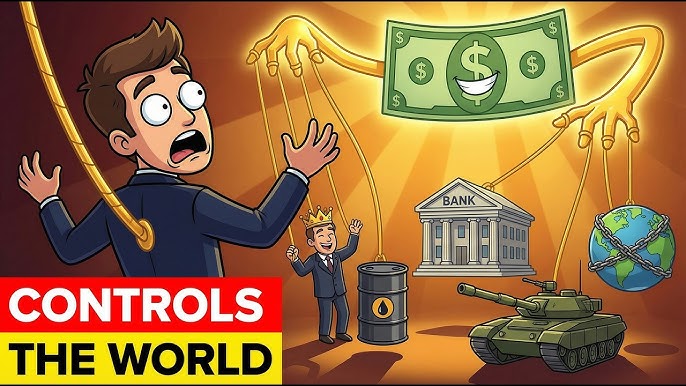
The dollar system is not just a currency — it is a global financial structure built after Bretton Woods (1944), when 44 countries made the US dollar the center of international trade, backed by gold.
Even after the US ended the gold link in 1971, the system survived through the 1974 petrodollar deal, where Saudi Arabia and OPEC nations agreed to sell oil only in US dollars. This forced every country to hold and use dollars
The Cracks Are Now Visible
According to IMF and J.P. Morgan data, the dollar’s share in global reserves has fallen below 60% in 2026, down from ~73% in the early 2000s. In just two decades, the dollar has lost over 13% of its global dominance — a clear sign of declining trust..
At the same time, central banks are quietly shifting toward gold. Its share in global reserves has risen from around 13% in 2017 to nearly 30% by 2025, with emerging economies leading aggressive buying. Analysts now even project gold could approach $4,000 per ounce by 2026 — a clear sign of declining trust in fiat systems.
This shift is also visible in trade patterns. Russia and China now conduct nearly 90% of their trade in ruble and yuan, bypassing the dollar. India, in 2026, has started paying for Russian oil in yuan and UAE dirhams, covering millions of barrels each month.
The Credit Is Quietly Collapsing
The weakening of the dollar is not just about trade — it’s also about debt and trust. The US national debt has crossed $38 trillion in 2026, while foreign investment in US bonds has been slowly declining, signaling growing caution.
New financial systems are rising to challenge the dollar. China’s CIPS handled about $24.5 trillion in 2024, growing rapidly, while the mBridge platform has processed $55 billion, mostly in digital yuan.
These systems show a clear shift toward alternatives beyond the dollar.
BRICS Pay, meanwhile, has reportedly reduced dollar usage inside the BRICS bloc by nearly two-thirds.
Each of these developments, on its own, looks small. But together, they tell a bigger story — the credit of the dollar system is quietly collapsing, not through a dramatic crash, but through a steady loss of trust..
How the Dollar Became King: From Bretton Woods to Petrodollar
To understand why the dollar is losing its credit today, we first need to understand how it became so powerful in the first place.
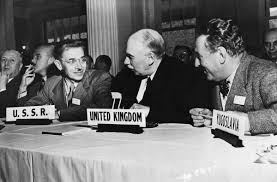
The Birth of a New World Order
In July 1944, while the Second World War was still going on, representatives from 44 countries gathered in a small town called Bretton Woods in the United States. Europe was in ruins. Britain, once the world’s financial centre, was exhausted and deeply in debt.
The global economy needed a new anchor, and the United States — untouched by war and holding nearly two-thirds of the world’s gold reserves — was the only country strong enough to provide it.
The agreement was simple but powerful. The US dollar was fixed to gold at $35 per ounce, and other currencies were linked to the dollar — making it “as good as gold.”
This created global trust, as countries could convert dollars into real gold anytime.
At the same time, institutions like the IMF and World Bank were formed, and the dollar quietly replaced the British pound as the world’s leading currency.
The Nixon Shock of 1971 — When the Rules Changed
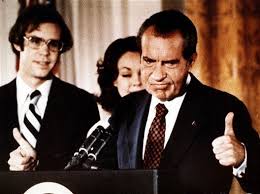
For about 25 years, the Bretton Woods system worked. But by the late 1960s, the US was printing more dollars than it had gold, mainly due to war spending. Countries like France began demanding gold in return.
On August 15, 1971, President Nixon ended dollar-to-gold convertibility — known as the Nixon Shock.This broke the system and created global uncertainty
The Petrodollar Deal of 1974 — A New Kind of Backing
In 1974, after the global oil crisis, the United States reached a quiet but powerful agreement with Saudi Arabia. Washington would provide military protection and security guarantees to the Saudi kingdom. In return, Saudi Arabia — and soon the rest of OPEC — agreed to sell oil only in US dollars and invest their surplus earnings into US Treasury bonds.
This single arrangement changed everything. Every country that needed oil now needed dollars. Every dollar earned by oil-exporting nations flowed back into the American financial system.
Why Countries Want to Escape the Dollar
The dollar’s real strength was never paper — it was trust.
For decades, countries believed dollars meant safety and stability.But now, that trust is starting to crack — largely because of America’s own decisions.
The 2026 Tariff Shock
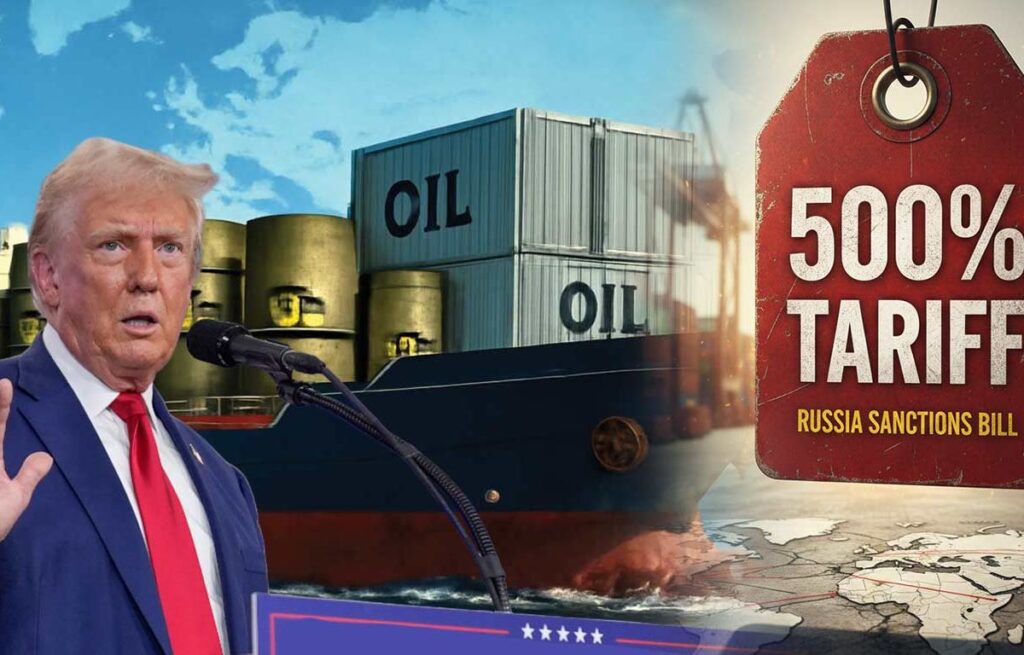
The most visible crack appeared in 2026, when the US under Donald Trump imposed aggressive tariffs on multiple countries — including the EU, China, and even India, with warnings of up to 25% duties. He also threatened 100% tariffs on BRICS nations if they moved to bypass the dollar.
Brazil’s President Lula called this approach “economic blackmail.”
For many countries, the message was clear — the dollar was no longer a neutral system, but a tool of pressure.
A Soft Power in Decline
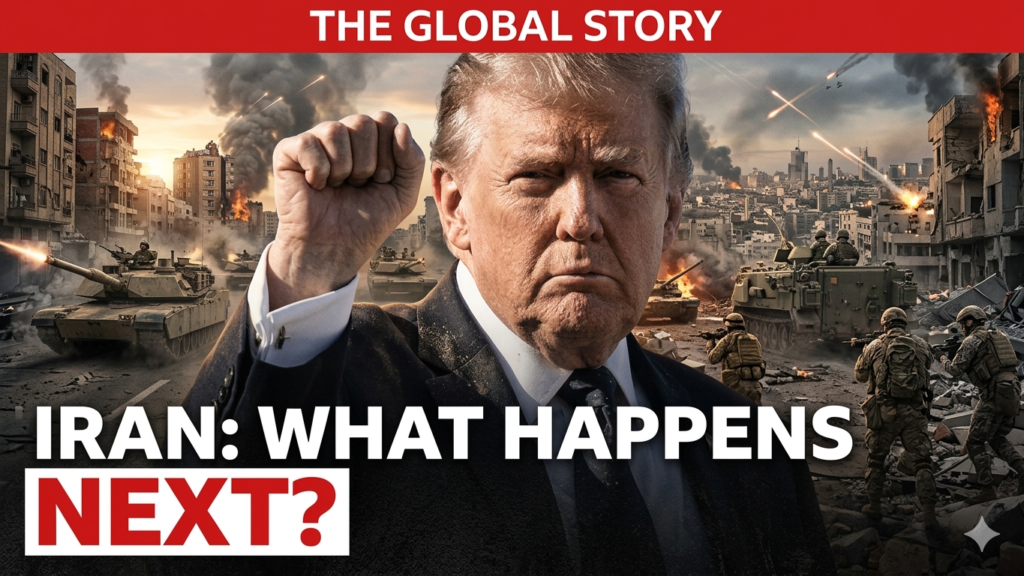
Another crack appeared in February 2026, when the US and Israel launched strikes on Iran under Operation Epic Fury, hitting multiple cities in one night.The move shocked many countries and raised concerns about global stability. As America’s image as a stabilising power weakens, the trust behind the dollar weakens with it.
The Weaponisation of the Dollar
This erosion of trust did not begin in 2026. It has been building for years through repeated use of the dollar as a financial weapon. The United States has imposed sanctions on Iran, Venezuela, Cuba, North Korea and many others, cutting them off from the SWIFT payment system and freezing their access to global banking networks.
In 2021, after the Taliban took over Kabul, Washington froze nearly $7 billion of Afghan central bank reserves.
Exported Inflation and Rising Debt
There is also a deeper issue — trust and debt.The US national debt has crossed $38 trillion in 2026, and when more dollars are printed, inflation spreads globally. The 2008 crisis already showed this — US problems, global impact. Even IMF research confirms that emerging economies suffer the most from US policy shifts.
BRICS and the Alternative Currency Push
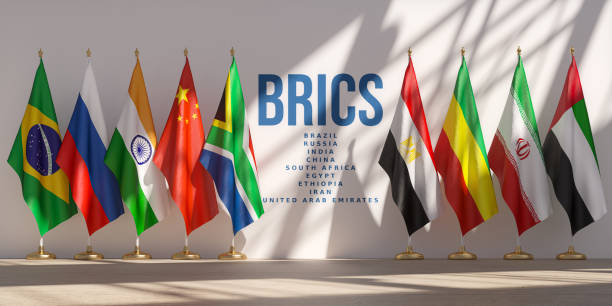
BRICS, which started in 2009 with five countries, has now expanded to 10 members by 2026, including Iran, UAE, Egypt, Ethiopia, and Indonesia. Together, it represents about 45% of the world’s population and over 35% of global GDP (PPP).
Its goal is not to replace the dollar overnight, but to build parallel systems so the dollar becomes just one option — not the only one.
China’s Growing Influence and the Rise of CIPS

At the centre of this shift is China. Beijing has been pushing the yuan as a serious international currency for more than a decade, but the real breakthrough came through its Cross-Border Interbank Payment System, known as CIPS.
According to Ledger Insights, CIPS processed nearly $245 trillion worth of yuan-denominated transactions in 2025 alone. This is not a small experiment — it is a fully functional global settlement network that provides a real alternative to the dollar-based SWIFT system.
China has also taken the lead in developing the digital yuan, and its role in the mBridge platform — a cross-border central bank digital currency system involving China, the UAE, Thailand, Hong Kong and Saudi Arabia — has already processed about $55 billion in payments, with 95 percent of those transactions settled in digital yuan.
Digital Currencies: The Quiet Revolution
Digital currencies are becoming a new battleground. India has launched the e-Rupee, China is expanding the digital yuan, and Russia has introduced the digital ruble. Over 130 countries are now exploring central bank digital currencies, according to BIS.
In 2025, BRICS also piloted a new settlement system backed by gold and member currencies — a clear step toward reducing dollar dependence.
India’s Practical Path
India is taking a balanced approach. In 2026, it began paying for Russian oil in yuan and UAE dirhams, handling millions of barrels monthly. It has also expanded local-currency trade with countries like the UAE, Russia, and others.While India officially supports the dollar system, it is quietly building alternatives in parallel..
What Happens If the Dollar Falls: Global Chaos and India’s Crossroads
For decades, the dollar has been seen as an unshakable pillar.
But if it weakens, the impact won’t be small — it will reshape the global system.
The Global Chaos Scenario
If the dollar were to lose its reserve currency status suddenly, the first shock would hit the global financial system itself. According to a 2024 analysis by the Atlantic Council, nearly 58 percent of global foreign exchange reserves and close to 88 percent of international transactions still depend on the dollar. A sharp decline would instantly disrupt trade flows, freeze cross-border payments, and trigger panic in bond markets around the world.
America — The First Casualty
The United States would be the first major casualty of its own currency’s collapse. With a national debt of more than $38 trillion in 2026, Washington depends heavily on foreign investors to keep buying its Treasury bonds. If that demand collapses, American interest rates would rise sharply, borrowing would become expensive, and the US economy could slide into a deep recession.
J.P. Morgan Research has already warned that in such a scenario, American financial assets would face broad depreciation and underperform compared to the rest of the world.
A Chain Reaction Across the World
The shock would not stay inside America. Europe would struggle with currency volatility, emerging markets would face sudden capital flight, and oil prices could swing wildly as the petrodollar framework weakens. Global inflation would rise, supply chains would break, and the poorest economies — many of which hold their savings in dollars — would suffer the most.
What This Means for India — The Opportunities
For India, however, this moment is not only a warning. It is also an opportunity.
A Stronger Rupee and Cheaper Imports
A weaker dollar would ease pressure on India’s import bill, especially for crude oil, which currently accounts for nearly 85 percent of domestic demand. If rupee-based trade with Russia, the UAE and African partners continues to grow, India could reduce its dependency on dollar-denominated oil payments and protect itself from currency shocks.
What This Means for India — The Risks
Export Pressure and Inflation
But the risks are equally real. A sudden dollar crisis could disrupt India’s $430 billion IT and services export sector, most of which is billed in dollars. A sharp fall in the dollar’s value would directly shrink these earnings.
According to MUFG Research, if global crude prices stay above $100 per barrel for long, India’s inflation could cross the 4.5 percent mark, squeezing household budgets across the country.
Caught Between Two Giants
India must also walk carefully between the United States and China. Leaning too far toward BRICS-led de-dollarization could invite American tariffs, while ignoring it could mean missing the next financial revolution.
Will the Dollar Really Fall? The Honest Assessment
After everything — the cracks, BRICS, digital currencies, and gold shift — one key question remains: Will the dollar really fall?
The Dollar Is Weakening, Not Dying
The first honest truth is that the dollar is losing ground, but it is not collapsing. According to the IMF’s Currency Composition of Official Foreign Exchange Reserves (COFER) data, the dollar’s share in global reserves has slipped from nearly 73 percent in 2001 to below 58 percent in early 2026.
That is a clear decline, but the dollar still holds more than double the share of its nearest rival, the euro. The Bank for International Settlements also confirms that nearly 88 percent of global foreign exchange trades still involve the dollar on at least one side. In short, the dollar is wounded — but still very much alive.
The Alternatives Are Real, But Incomplete
The second reality is that alternatives are rising — but none can replace the dollar yet.
The Chinese yuan holds only ~3% of global reserves, BRICS systems are still in early stages, and digital currencies are not fully ready for global use.For now, no system matches the dollar’s scale, liquidity, and trust
History Warns Us to Be Patient
The third truth comes from history. Reserve currencies don’t collapse overnight — they decline slowly. The British pound took nearly 30 years to lose dominance. Today’s shift is similar.
As Goldman Sachs notes, this is “de-dollarization 2.0” — a gradual transition, not a sudden collapse.
The Honest Conclusion
The honest conclusion is simple: the dollar won’t collapse anytime soon — but its monopoly is fading.
The world is moving toward a multi-currency system, where gold, yuan, euro, and others share influence. This shift won’t be sudden — it will show up slowly in inflation, prices, and everyday costs.

20 lakh years ago, Early Pleistocene Earth. The African savanna glows under a golden sunrise, with endless grasslands, scattered acacia trees, distant volcanoes, and herds of prehistoric animals grazing peacefully. A tribe of anatomically accurate Homo erectus steps out from the tall grass. They have muscular athletic bodies, long powerful legs adapted for endurance, realistic prehistoric facial features, thick dark hair, wearing simple animal-hide clothing, carrying Acheulean stone hand axes and primitive wooden spears.