February 28, 2026 — that night, Oman’s Foreign Minister told the world that peace was “within reach.” Iran had signaled a breakthrough in nuclear talks.That same night,
American and Israeli aircraft took off.In the next 12 hours — 9 Iranian cities, 900 strikes, and the death of a Supreme Leader.How did this war begin? Where is it heading? And is the world on the brink of World War 3?Here is the full investigative analysis.
How the Iran–Israel Conflict Escalated
The attack on Iran on February 28, 2026, was not a sudden event. The roots of this confrontation go back to the 1979 Islamic Revolution, which dramatically reshaped Iran’s relationship with the West.
Before 1979, Iran was considered a close regional partner of the United States and Israel.
However, the revolution transformed the country’s political direction, turning former alliances into deep ideological hostility.
As Iran’s influence gradually expanded across the Middle East, tensions with Israel and Western powers continued to intensify.
Tehran strengthened its regional presence and developed strategic networks across the region, while Israel increasingly viewed Iran’s growing power as a direct threat to its national security.
Over the years, several events added to this rising tension — including the killing of General Qasem Soleimani in 2020, the Gaza war in 2023, the “Operation Midnight Hammer” in 2025, and persistent accusations that Iran was pursuing nuclear weapons capabilities. These developments slowly built up a volatile geopolitical environment.
February 28, 2026 — The Night Everything Changed
The turning point came on the night of February 28, 2026, when the United States and Israel reportedly launched a coordinated military operation against Iran known as “Operation Epic Fury.” According to reports cited by international media outlets such as Al Jazeera, more than 900 strikes were carried out across nine Iranian cities within approximately twelve hours
.During this unprecedented attack, Iran’s Supreme Leader Ayatollah Ali Khamenei was reportedly killed.
The United States outlined several objectives for the operation: preventing Iran from developing nuclear weapons, destroying its ballistic missile arsenal, weakening its proxy networks, and severely damaging the Iranian naval forces, while also hoping that internal political pressure might eventually lead to regime change
.Iran Strikes Back: Attacks Across the Region
Iran did not limit its retaliation to Israel alone. In a coordinated response, it reportedly launched around 420 missiles and drones targeting U.S. military facilities and allied infrastructure across several countries in the region.
- According to reports cited by Al Jazeera, roughly 39% of these strikes—about 162 missiles—were directed toward Israel, while around 40% (167 missiles) targeted the United Arab Emirates, and about 11% (46 missiles) were aimed toward Qatar.
Key U.S. military installations came under threat during the strikes. Iranian Shahed-136 drones reportedly targeted strategic bases including Al Udeid Air Base in Qatar, Ali Al Salem Air Base in Kuwait, and the headquarters of the U.S. Navy’s Fifth Fleet in Bahrain.
Alongside military sites, several civilian and energy-related facilities in Saudi Arabia and the United Arab Emirates were also affected.
This large-scale retaliation transformed what initially appeared to be a confrontation between two countries into a rapidly expanding regional conflict, raising fears that the crisis could spread further and draw additional nations into the turmoil
.Why the Iran War Is Raising Global Fears
Following the reported death of Iran’s Supreme Leader Ayatollah Ali Khamenei on February 28, leadership in Iran quickly shifted to his 56-year-old son, Mojtaba Khamenei.
Mojtaba is widely regarded as a far more hardline figure and is believed to have maintained deep connections with the Islamic Revolutionary Guard Corps (IRGC) for decades.
Under his leadership, Iran’s response to the conflict has taken a far more aggressive direction.
Iran’s retaliation is no longer limited to military installations.
Instead, it has increasingly targeted critical infrastructure in countries seen as supporting the United States and its allies.
Reports suggest that several strategic locations across the Gulf region have faced attacks or disruptions.
Drone strikes were reported near Dubai’s Jebel Ali port, one of the world’s busiest logistics hubs, while areas close to Dubai International Airport also experienced security alerts.
Energy infrastructure across the region has faced growing pressure, including disruptions to Qatar’s major LNG production facilities, attacks on key power lines in Kuwait, and repeated threats directed at the headquarters of the U.S. Navy’s Fifth Fleet in Bahrain.
One of the most alarming incidents involved a major fire at Saudi Arabia’s Ras Tanura refinery, one of the largest oil processing facilities in the world.
The Strait of Hormuz Crisis
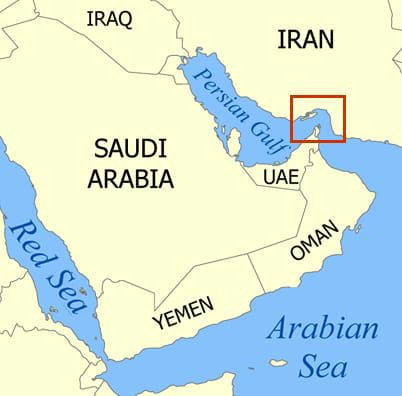
However, Iran’s most powerful strategic tool is not a missile or a drone—it is geography.
The Strait of Hormuz, a narrow maritime passage roughly 33 kilometers wide, remains one of the most critical energy routes on the planet.
According to data frequently cited by international media such as Al Jazeera, nearly 27% of the world’s petroleum products and around 20 million barrels of oil per day pass through this corridor.
With rising tensions in the region, shipping through this route has faced severe disruptions.
Iranian military officials linked to the IRGC have warned that global oil markets could face extreme pressure if the strait becomes fully blocked.
Some statements from Iranian leadership have suggested that the closure of the Strait of Hormuz could be used as leverage against Western military presence in the Gulf.
The Global Oil Shock:
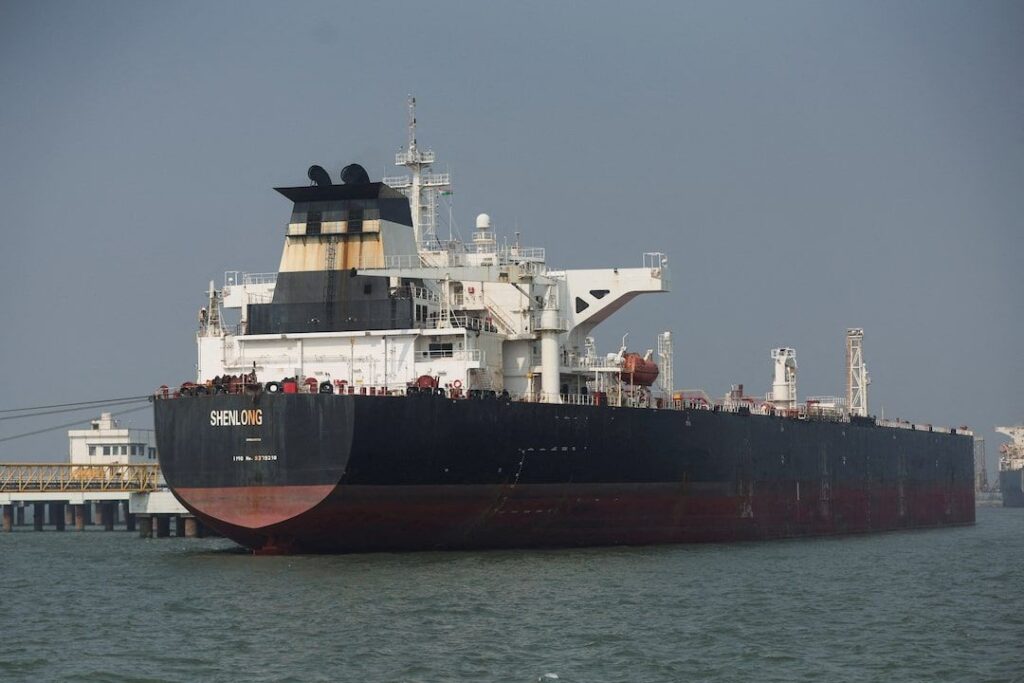
Rising Energy PricesThe disruption around the Strait of Hormuz has triggered widespread concern across global energy markets. Since the escalation of the conflict on February 28,
the benchmark Brent crude oil price has reportedly surged by more than 40 percent, reflecting the intense uncertainty surrounding global oil supply.
The panic in energy markets has been so significant that the International Energy Agency (IEA) announced an emergency measure involving the release of roughly 400 million barrels of strategic oil reserves from its 32 member countries.
This is being described as one of the largest coordinated energy responses since the 1973 global oil crisis.
Across the Asia-Pacific region, several governments have already begun introducing emergency energy-saving measures.
In Thailand, authorities have encouraged work-from-home policies for some government sectors while limiting exports of diesel, petrol and LPG. Meanwhile,
countries such as China and South Korea have begun implementing fuel-conservation policies in response to the rising uncertainty in energy supplies.–
–The Indian Impact: Pressure on LPG Supply
The global energy shock is also being felt in India, particularly in the supply of cooking gas. India imports roughly 67 percent of its LPG demand, with a substantial portion sourced from Middle Eastern producers.
As tensions in the region disrupt energy logistics, concerns have emerged about supply pressure in domestic markets.In response to the situation, Indian authorities have reportedly prioritised household energy needs.
Oil refining and distribution companies have been instructed to ensure that domestic LPG connections—serving more than 330 million households—remain the top priority, while industrial and commercial consumption may face tighter supply conditions.
As a result, commercial LPG cylinders used by restaurants, hotels and small food businesses have experienced shortages in several urban areas.
Reports from cities such as Mumbai indicate that some establishments have already faced operational challenges due to rising fuel costs and supply disruptions.
Economic analysts have also warned about the broader macroeconomic impact. A recent assessment from MUFG Research suggested that if crude oil prices remain above $100 per barrel,
India’s inflation rate could move beyond the 4.5 percent threshold, increasing pressure on household budgets and economic stability.
The Shadow War — Could Iran’s Allies Join In?
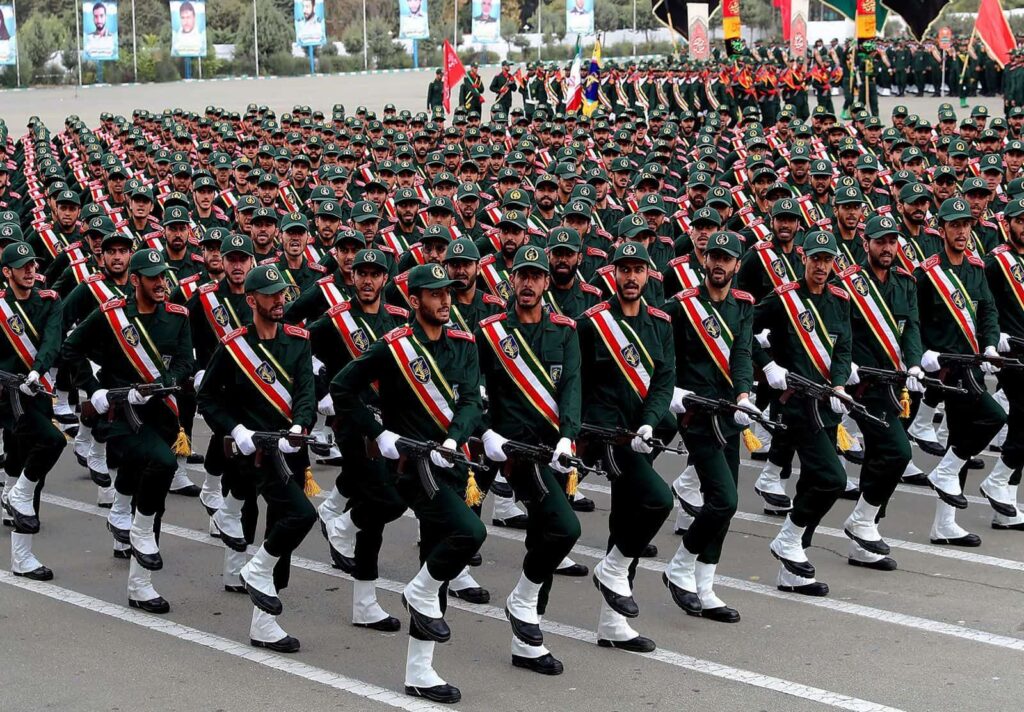
Iran’s powerful military wing, the Islamic Revolutionary Guard Corps (IRGC), has long understood that a direct conventional war against the advanced militaries of United States and Israel would be extremely difficult.
As a result, Iran has spent decades building what analysts often describe as a “shadow war” strategy.
Instead of fighting alone, Tehran has developed a network of regional proxy allies across the Middle East.
These groups are capable of opening multiple fronts, stretching the conflict and placing pressure on Western forces and their regional partners.Hezbollah:
Opening a Northern Front
According to reports cited by Al Jazeera, the Lebanese militant group Hezbollah openly entered the conflict in early March 2026, describing its actions as a “defensive step.”
On March 2, Hezbollah reportedly coordinated closely with Iran and launched more than 200 rockets toward northern Israel.
Intelligence assessments suggest that Hezbollah continues to maintain a large arsenal of advanced rockets and ballistic missiles.
Some estimates indicate that the group possesses around 20,000 missiles, capable of striking major Israeli cities such as Tel Aviv and Jerusalem.
The Houthis and Iraqi Militias:
Opening Additional Fronts Iran’s strategy is not limited to a single battlefield.
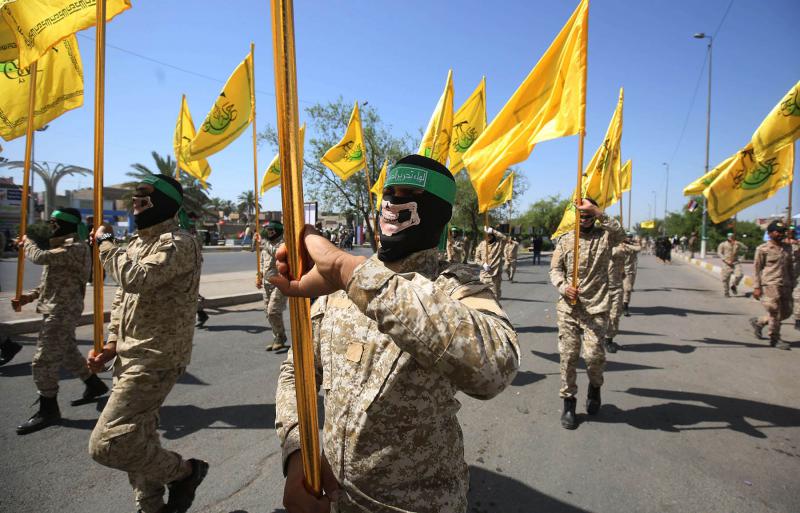
Across the Middle East, several groups aligned with Tehran have begun increasing pressure on U.S. and allied interests.
In Yemen, the Houthi movement has been targeting commercial shipping routes in the Red Sea, disrupting international trade and raising concerns about the safety of global shipping lanes.
At the same time, Shia militias operating in Iraq and Syria have reportedly launched repeated drone attacks on U.S. military installations in the region.
These actions are forcing Washington to spread its military resources across multiple fronts rather than concentrating on a single battlefield.
This evolving “shadow war” suggests that Iran’s broader strategy is not necessarily to win a direct conventional battle against the United States or Israel.
Instead, the goal appears to be to draw its opponents into a long, costly war of attrition, stretching their military resources and potentially transforming what began as a regional confrontation into a wider international crisis.
The Risk of Oil Routes and a Global Economic ShockThe global economy consumes roughly 105 million barrels of oil every day, and a large portion of this supply originates from the Middle East.
Countries such as Saudi Arabia, the United Arab Emirates, Iraq, Kuwait, Qatar, and Iran hold some of the world’s largest oil and gas reserves, making the region a central pillar of the global energy system.
The most vulnerable point in this supply chain is the Strait of Hormuz, through which nearly 20 million barrels of oil pass every day. Because of this, any conflict in the region immediately sends shockwaves through global energy markets.
From $70 to $120: The Oil Price Shock
As tensions escalated, oil prices reacted sharply. Crude oil that had been trading around $70 per barrel surged to nearly $120 per barrel.
Oil is not only used as fuel—it is also a fundamental raw material for transportation, manufacturing, and global trade.
When energy prices rise this rapidly, transportation costs increase, production becomes more expensive, and global supply chains begin to strain, pushing inflation higher across many economies.History shows that sudden spikes in oil prices often precede major economic disruptions.
The 1973 Arab oil embargo, the 1978 Iranian Revolution, and the 2008 global financial crisis all witnessed sharp increases in energy prices followed by significant economic instability around the world.
The Ultimate Climax: Regional War or World War III?
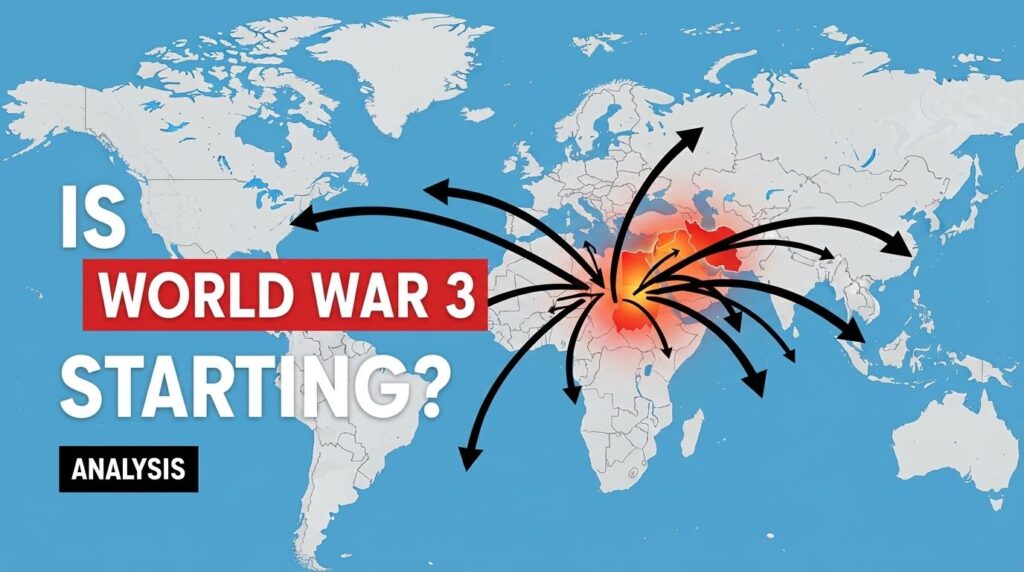
Today, many leading strategic think tanks and defence analysts are debating the possible endgame of the current crisis.
With the Strait of Hormuz under threat and missile exchanges escalating, the world is now facing several possible future scenarios. Based on current geopolitical assessments, three major outcomes are being discussed.
- Scenario A — Ceasefire and Diplomacy(The safest outcome, but the most difficult)
The most stable path for the world economy would be a ceasefire followed by diplomatic negotiations. However, at the moment this scenario appears unlikely.
Iran’s new leadership and the powerful Islamic Revolutionary Guard Corps (IRGC) have signalled strong resistance to diplomatic compromise.From Tehran’s perspective, the conflict is increasingly being framed as an existential struggle rather than a limited military confrontation.
As long as Iran believes external pressure is threatening its national security, the chances of an immediate ceasefire remain extremely low.
- Scenario B — A Prolonged Regional War(The most likely and dangerous scenario)
A prolonged regional conflict is widely considered the most realistic outcome. As discussed in earlier chapters, Iran’s broader strategy may not be to win a decisive military victory, but rather to stretch the conflict over time and across multiple fronts.
Recent geopolitical analyses cited by major outlets such as Al Jazeera suggest that Iran’s objective may be to transform the conflict into a wider regional crisis. By threatening key shipping lanes, energy infrastructure, and aviation routes, Tehran could disrupt global energy markets and place pressure on Western economies.
Research from the European Union Institute for Security Studies (EUISS) has also highlighted the risk that neighbouring Gulf states could gradually become involved in the conflict. If additional countries are drawn in, what began as a bilateral confrontation could evolve into a much broader regional war with global consequences.
Iran’s Economic Warfare Strategy
Iran has increasingly relied on relatively inexpensive drones to challenge far more expensive Western defence systems.
Some reports suggest that drones costing around $20,000 are being used to trigger the launch of advanced air-defence missiles worth millions of dollars.
This strategy forces opponents such as the United States and Israel to spend heavily on defence, gradually increasing the financial burden of the conflict.
From a strategic perspective, this approach creates long-term pressure on Western military resources.
The United States must also maintain deterrence against other major rivals, including China, North Korea, and Russia
. As a result, prolonged regional conflicts can stretch military and economic capacities across multiple global theatres.
- Scenario C — World War III: Still Unlikely
Still Unlikely Despite the intensity of the current crisis, many strategic analysts believe that a global world war remains unlikely at this stage. Major powers are generally cautious about entering direct large-scale conflicts with each other, especially when such confrontations carry the risk of escalation toward nuclear warfare.
Countries such as China and Russia may offer political or diplomatic support to Iran,
but they are unlikely to directly confront U.S. forces in a full military confrontation.
For this reason, many experts believe the conflict is more likely to remain a prolonged regional war rather than evolving into a direct global war between superpowers.
What do you think about this situation? Share your thoughts.