
Today, we open the TV or scroll through news on our phones every day…and everywhere we hear the same kind of headlines—sometimes India-Pakistan tensions, sometimes wars, and sometimes political turmoil.But amidst all this noise, there is a crisis that is silently growing—India’s water crisis.According to a report by NITI Aayog,
by 2030, groundwater in 21 major Indian cities could be completely depleted,and water demand may become twice the available supply.
In this article, we explore this growing crisis in India and how it could affect water availability in your own home.
So, what exactly is a water crisis?
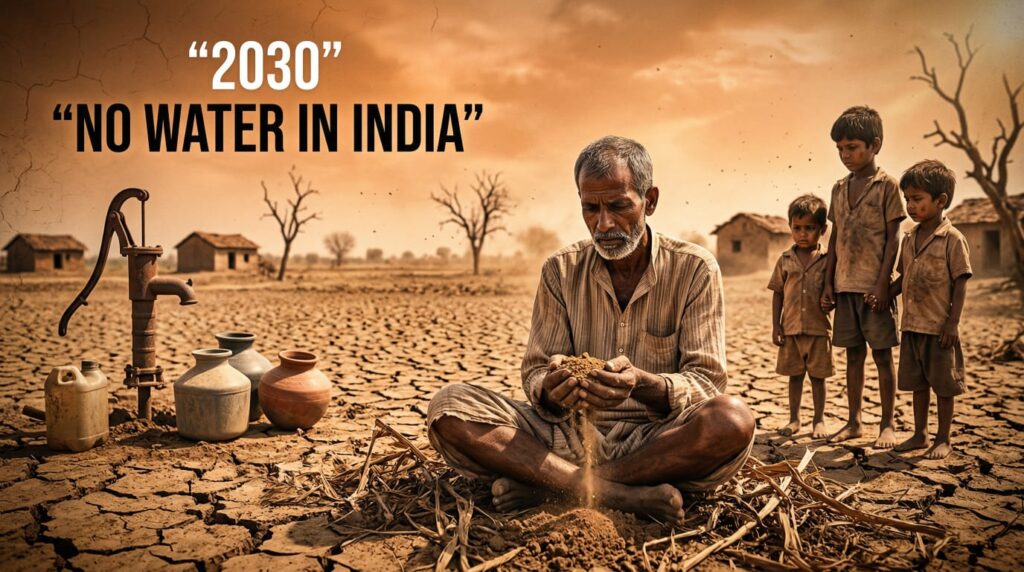
Technically speaking, according to definitions by the United Nations (UN) and the World Resources Institute (WRI),“when the demand for water in a region exceeds the available supply of clean water, the situation is called ‘Extreme Water Stress.’”And today, India stands dangerously close to this red zone.
India’s Water Reality: What the Data Reveals
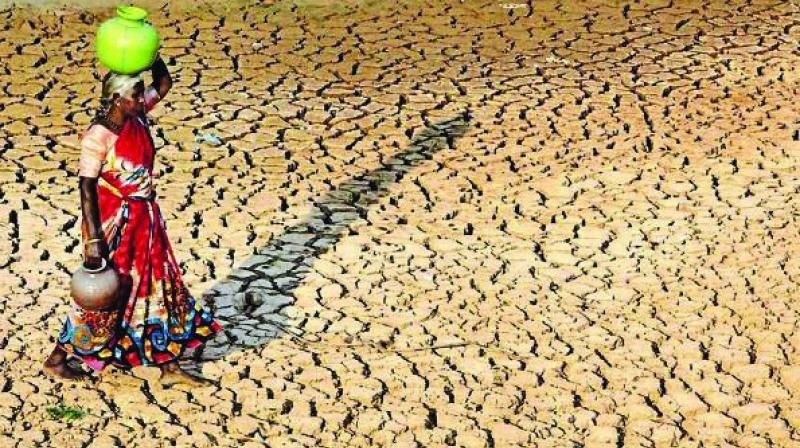
The seriousness of the situation is clearly highlighted in the Composite Water Management Index report published in 2018 by NITI Aayog.According to the report, India is home to nearly 18% of the world’s population, but has access to only 4% of global freshwater resources.
Today, nearly half of the country’s population—around 600 million people—are facing high to extreme water stress.The concern is not just about the quantity of water, but also its quality. In the global Water Quality Index, India ranks 120th out of 122 countries, which means that nearly 70% of the available water in the country is contaminated.
The Depleting Underground Reserves
This crisis is not limited to rivers and lakes; India’s groundwater levels are declining at an alarming rate. According to recent data from the Central Ground Water Board (CGWB), out of more than 700 districts in India, at least 256 districts have reached “critical” or “over-exploited” groundwater levels.
In simple terms, we are extracting water from the ground faster than nature can replenish it.
Warning Signs: Water Crisis in Major Cities
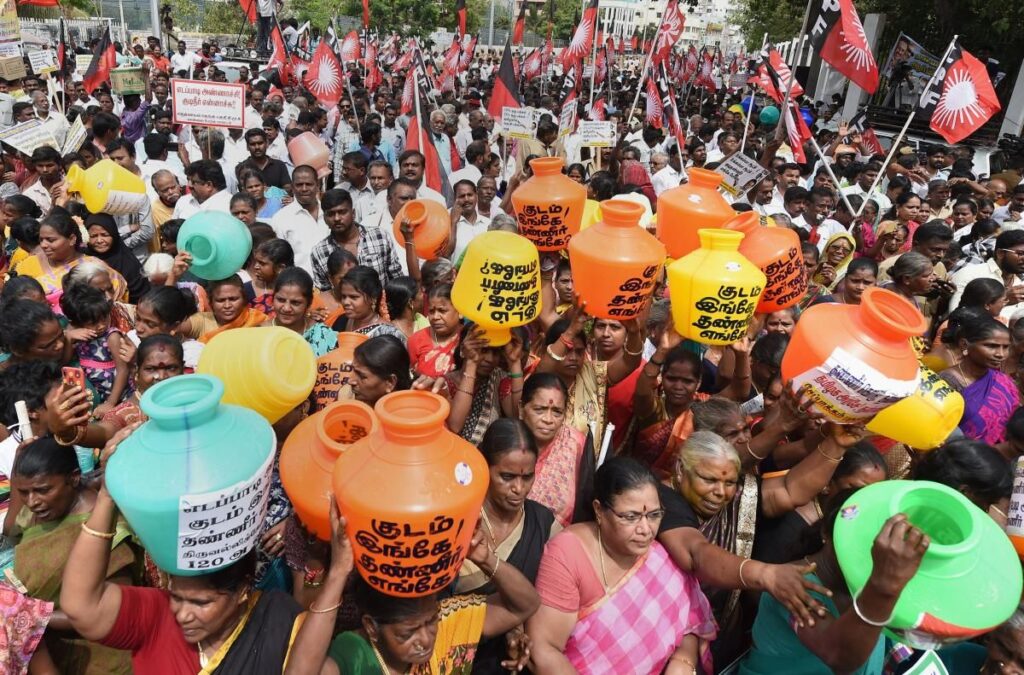
The impact of this imbalance is now clearly visible in India’s major cities:
Bengaluru Crisis (March 2024)
India’s “Silicon Valley” recently faced an unprecedented water crisis. According to official data, out of around 13,900 borewells supplying water to the city, nearly 6,900 have completely dried up.
Chennai and Delhi: Bengaluru Is Not Alone
Bengaluru is not an isolated case.In 2019, Chennai became the first major Indian city to face a “Day Zero” situation—when water in the main reservoirs almost ran out and taps nearly went dry.
Meanwhile, the national capital, Delhi, continues to struggle every summer, with many areas depending heavily on water tankers for daily supply.This clearly shows that the crisis is no longer limited to a few large cities—it is spreading across regions.
Ground Reality — Water Crisis Across States, Cities, and VillagesInvisible Proof: What Satellite Data Reveals
Invisible Proof: What Satellite Data Reveals
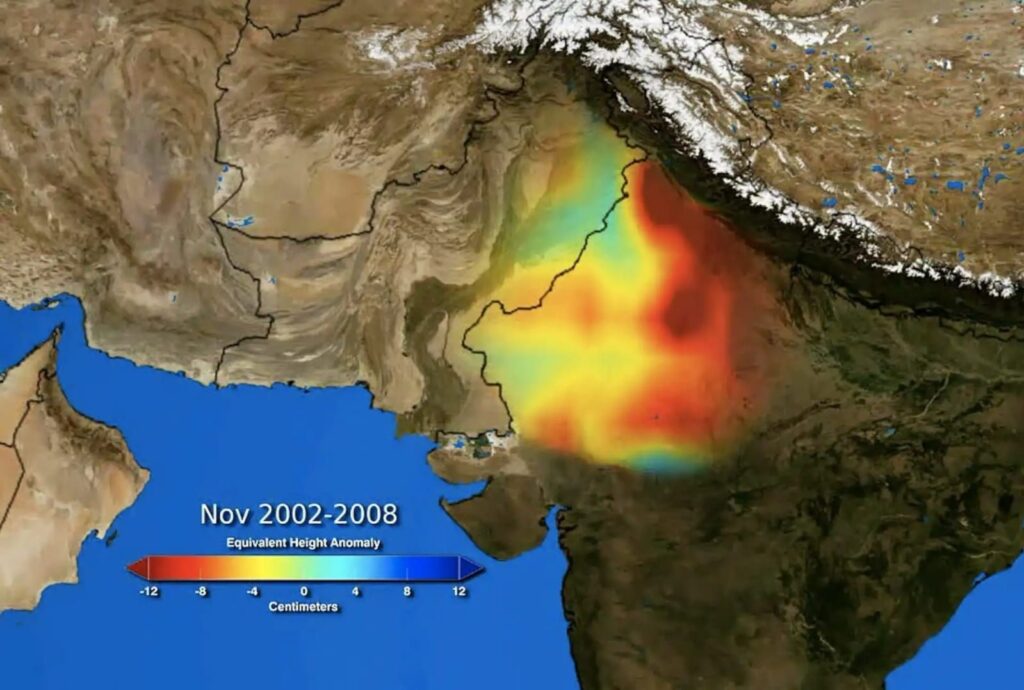
The severity of India’s water crisis is also supported by satellite data.
Findings from NASA’s Gravity Recovery and Climate Experiment (GRACE) mission provide strong evidence of the country’s declining groundwater levels.
According to this data, groundwater levels in northern India are falling by nearly one foot every year.Between 2002 and 2008 alone, the region lost around 109 cubic kilometers of groundwater—an amount large enough to fill several major reservoirs.
Macro View: Groundwater Extraction Across States
- The Annual Groundwater Quality Report 2024 by the Central Ground Water Board (CGWB) provides a clear picture of groundwater extraction across India.
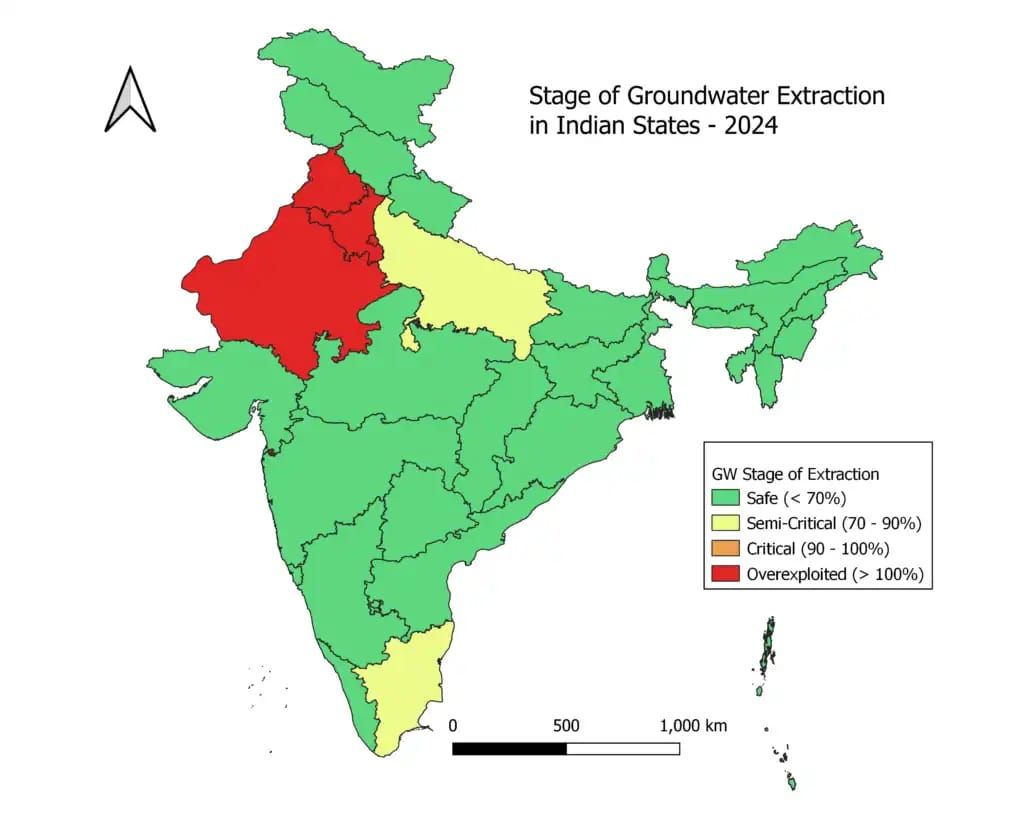
According to the report, states are classified into different categories based on their level of groundwater use:
• Over-Exploited (>100% extraction): Punjab, Rajasthan, Delhi, Haryana, and Dadra & Nagar Haveli. In these regions, more groundwater is being extracted than what is naturally recharged.
• Semi-Critical (70–90%): States like Tamil Nadu and Uttar Pradesh fall into this warning zone.
• Safe (<70%): Maharashtra, Bihar, Andhra Pradesh, and Assam fall under this category, but they still face local and geographical challenges related to water availability.
Rajasthan: Where Groundwater Is Rapidly Declining
In Rajasthan, the crisis is not just about water scarcity, but about excessive extraction.The state’s stage of groundwater extraction has reached around 148.77%, meaning nearly one and a half times more water is being withdrawn than what is naturally replenished.
Punjab and Haryana: The Cost of the Green Revolution
Punjab and Haryana, once the backbone of India’s Green Revolution, have now become the epicenter of the groundwater crisis.
The rice–wheat cropping cycle has placed immense pressure on water resources, leading to rapid depletion.At the same time, the heavy use of fertilizers in agriculture has further degraded water quality, making the remaining water unsafe in many areas.
A Contrasting Case: Bihar
On the other hand, states like Bihar, which are technically classified as “safe” in terms of groundwater extraction, face a different challenge.Due to poor water management, they experience a dual problem— frequent flooding, along with local shortages of safe drinking water.
Drought in Southern and Western India
The situation in South India is equally concerning. According to 2024 data, in Karnataka, nearly 75% of lakes and reservoirs across 31 districts have either dried up or are on the verge of drying.
In western India, the Marathwada region of Maharashtra has been facing recurring droughts, turning water scarcity into a persistent crisis.
Root Causes – Why Is India Running Out of Water

To understand India’s current water crisis, it is important to examine its root causes in depth.This crisis did not emerge suddenly—it is the result of decades of agricultural policies, unplanned urbanization, and administrative neglect.
The Green Revolution Paradox
The Green Revolution of the 1960s transformed India’s agricultural landscape, pulling the country out of food scarcity and ensuring strong food security.
The data reflects its success: India’s wheat production increased from just 12 million tonnes in 1965 to over 110 million tonnes in 2023.
The country moved from being a food-importing nation to becoming one of the world’s major food exporters.
However, this achievement came with a significant hidden cost—one that was paid by India’s groundwater resources.
In states like Punjab and Haryana, traditional crops were replaced with a rice–wheat cropping cycle. Rice is a water-intensive crop, naturally suited for regions with high rainfall.
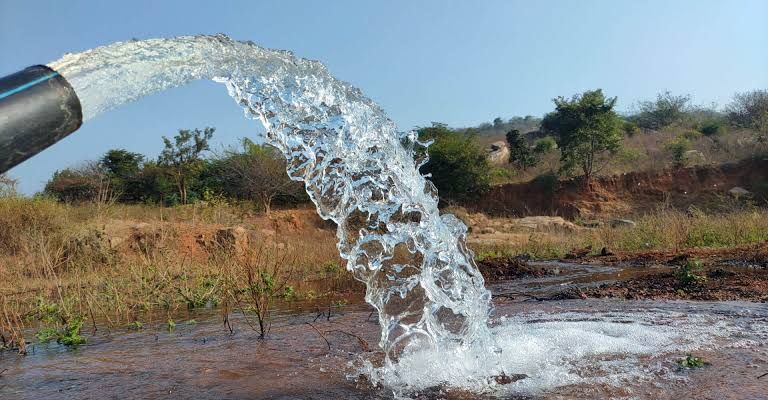
- Today, the situation is such that nearly 85% of accessible groundwater in Punjab is used solely for growing rice and wheat.As a result, the sharp rise in irrigation demand has pushed over 80% of blocks in Punjab into the “over-exploited” category.
Free Electricity and the Rise of Borewell Culture
This excessive use of water in agriculture has been further reinforced by political policies.
In states like Punjab, Haryana, Uttar Pradesh, and Bihar, farmers are provided with free or heavily subsidized electricity for irrigation.
This policy has led to the widespread growth of an unregulated borewell culture across the country.
At present, nearly 32 million (3.2 crore) pumps—diesel, electric, and solar—are continuously extracting groundwater across India.
Due to free electricity, these pumps often keep running even when fields do not actually need water.
Unplanned Urbanization and Concrete Expansion
After agriculture, the second major driver of the water crisis is the unplanned expansion of cities.Rapid urbanization has turned cities into concrete landscapes, replacing natural ecosystems.
Lakes, ponds, and wetlands have been filled and built over with multi-storey structures. At the same time, asphalt and concrete roads have sealed the ground surface.
As a result, even during heavy monsoon rains, water is unable to seep into the ground and recharge groundwater reserves.
Instead, rainwater flows directly into drains and sewage systems—leading to urban flooding on one hand, and declining groundwater levels on the other.
Industrial Growth and Water Contamination
India’s water crisis is not just about the quantity of water, but also about its quality.A large portion of the remaining surface and groundwater has been contaminated by industrial waste and untreated sewage.
Reports from the Central Pollution Control Board (CPCB) present a deeply concerning picture.
Nearly 75% of India’s rivers fail to meet drinking water standards due to heavy pollution.
One of the most alarming aspects of this crisis is that only about 10% of sewage is treated before it enters rivers or seeps into the ground.
This untreated, toxic water directly contaminates soil and groundwater, making large portions of remaining water resources unsafe for consumption.
The Domino Effect — When Water Crisis Becomes a National Emergency
Food Crisis and Agrarian Distress
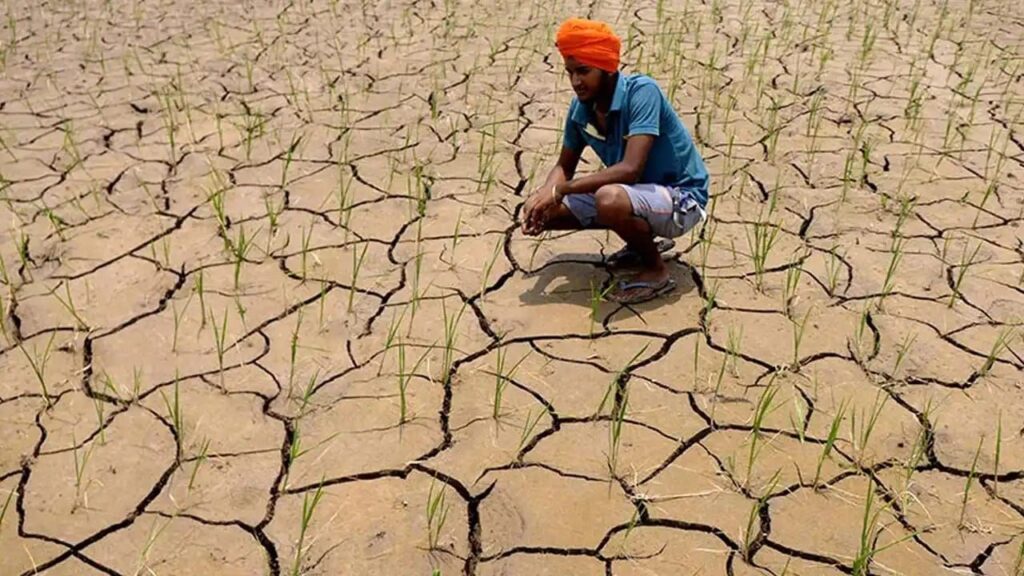
The first and most severe impact of water scarcity will be on food security.When groundwater levels fall beyond recovery, irrigation becomes nearly impossible.
This situation is further intensified by climate change, as rising temperatures and irregular monsoon patterns continue to disrupt the natural rainfall cycle.
As crops fail, food supply declines, leading to a sharp rise in market prices.Ultimately, it is the common citizen who bears the burden in the form of food inflation.
Economic Impact and GDP Loss
According to a report by the World Bank, if water management is not improved, India could face a decline of up to 6% in its GDP by 2050 due to water scarcity.
Several key sectors of the Indian economy—such as textiles, beverages, power generation, and agriculture—are highly water-intensive.
As water shortages worsen and rationing becomes necessary, these industries may be forced to reduce or halt production.
This would not only result in significant financial losses for businesses, but also put millions of jobs at risk.
Urban Breakdown and the Rise of Tanker Economy
According to estimates by the United Nations (UN), nearly half of India’s population will be living in cities by 2050.
However, unplanned urbanization is already creating a serious urban water crisis.With concrete covering large parts of cities, rainwater is unable to recharge the ground, while rivers and local water bodies continue to shrink.
If the current trend continues, by 2030, urban water infrastructure could come under severe stress.
In such conditions, the influence of the tanker economy (often referred to as tanker mafia) is likely to grow.
Early signs of this can already be seen in cities like Chennai and Bengaluru, where dependence on private water tankers is steadily increasing.
Climate Migration – The Movement Driven by Water Scarcity
Studies by the National Sample Survey Office (NSSO) indicate that lack of resources, especially in agriculture, is a major driver of migration.
As water scarcity intensifies in rural areas, a large number of people may be forced to move towards cities in search of basic necessities.
This will further burden already stressed urban centers like Delhi, Mumbai, and Bengaluru, pushing their systems closer to collapse.
Health Crisis and Emerging Diseases
The final and most dangerous stage of this domino effect will impact the healthcare system.Due to excessive groundwater extraction, the concentration of toxic elements such as arsenic, fluoride, and nitrate is increasing in underground water sources.
According to government data, over 56% of India’s districts have groundwater with nitrate levels above the safe limit.
This contamination poses serious health risks. Long-term exposure to polluted water has been linked to cancer, kidney failure, and severe health disorders, especially in children.
Government Efforts and Their Limitations
Given the seriousness of the water crisis and the looming 2030 threat, it is not that the government has remained inactive.Over the past decade, several ambitious schemes have been launched to improve water conservation and supply.
Jal Jeevan Mission: “Pipes Exist, But Where Is the Water?”
Government Effort:Launched in 2019, this mission has increased rural household tap connections from around 17% to over 70%.
Ground Reality:
While the scheme has been successful in building infrastructure—laying pipelines and installing taps—it has struggled to ensure source sustainability.
In many drought-prone regions such as Maharashtra, Rajasthan, and Bundelkhand, pipelines are in place and taps have been installed, but due to drying borewells and depleted water sources, these taps often remain non-functional—reduced to mere “showpieces.”
Atal Bhujal Yojana: A Policy Contradiction
Government Effort:This ₹6,000 crore scheme, supported by the World Bank, aims to improve groundwater management in seven of India’s most water-stressed states.
Ground Reality:However, the scheme faces a major policy contradiction.On one hand, the government promotes water conservation; on the other, it continues to provide free or heavily subsidized electricity to farmers.
As long as electricity remains freely available, there is little incentive to reduce groundwater extraction, leading to continued overuse through borewells.
It is clear that both central and state governments have introduced multiple initiatives to tackle the water crisis.
However, the ground reality suggests that these efforts have not been as effective as intended.
Can India Avoid the 2030 Water Crisis? (Solutions & Survival Strategy)
The 2030 water crisis is undoubtedly a serious national threat, but it is not irreversible.If India takes timely action—by reforming policies and making water management a national priority—the situation can still be improved.
Addressing this crisis will require a multi-dimensional approach, ranging from policy-level reforms to changes in individual behavior.
A Global Masterclass: The Singapore Model
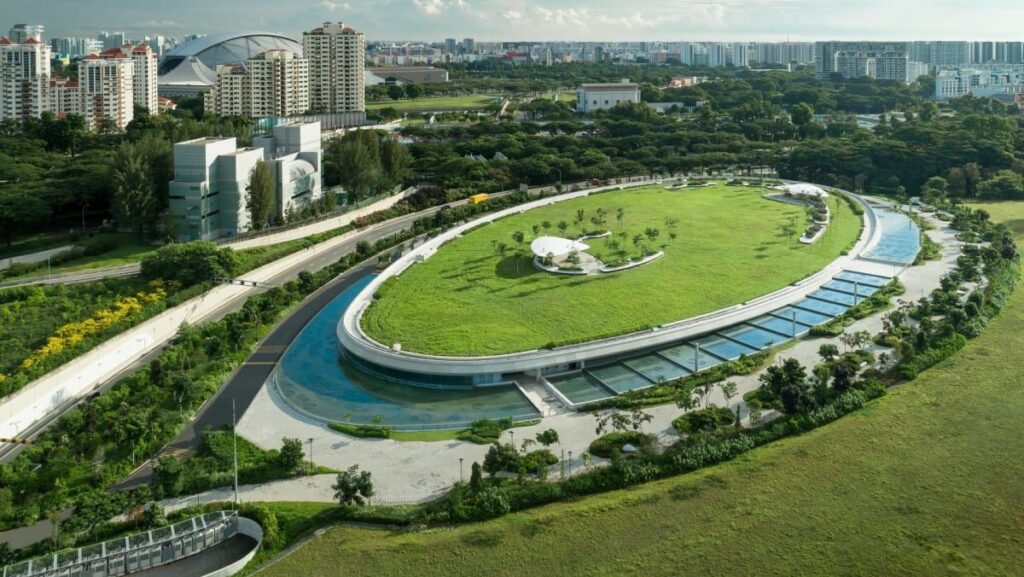
Singapore, a country with almost no natural freshwater resources, was once heavily dependent on Malaysia for its water supply.
To overcome this vulnerability, it developed a long-term strategy known as the “Four National Taps”— imported water, rainwater collection, advanced recycled water (NEWater), and seawater desalination.
Today, through this integrated and forward-looking approach, Singapore has transformed itself into a fully water-secure nation.
Israel’s Model: Drip Irrigation and Water Recycling
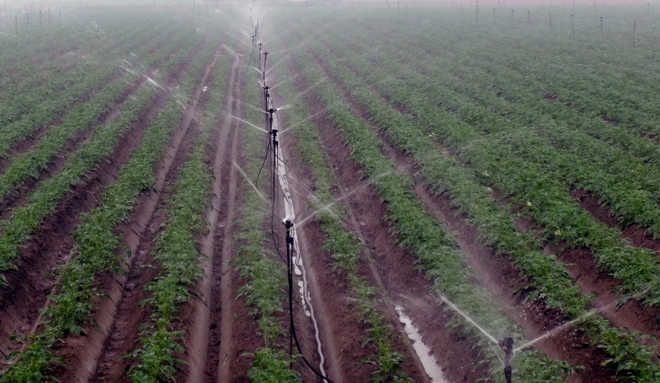
Israel, where nearly 60% of the land is desert, is still one of the world’s leading agricultural exporters.It achieves this by recycling over 90% of its wastewater for agricultural use.
In addition, Israel pioneered drip irrigation, a technique that delivers water directly to plant roots, reducing water usage by 50–70%.
National and Policy-Level Reforms
To address the water crisis, India needs strong structural reforms in its agricultural policies:
Crop Diversification:States like Punjab and Haryana must move away from water-intensive crops such as rice and sugarcane.
The government should promote low-water crops like millets and pulses by offering higher MSP and financial incentives.
Rationalizing Free Electricity:Unlimited and free electricity in agriculture has encouraged the unchecked growth of borewell usage.
Instead, farmers should be supported through Direct Benefit Transfer (DBT), with electricity usage being properly metered and billed.
This would help reduce excessive groundwater extraction.
Urban Planning: Building “Sponge Cities”
India’s concrete-heavy cities need to be redesigned as “sponge cities”—urban areas that can absorb and store rainwater efficiently.
Permeable Infrastructure:
Urban infrastructure should include permeable pavements, allowing rainwater to seep directly into the ground and recharge groundwater levels.
Final Thought
Can India avoid the 2030 water crisis? The answer is yes—but it depends on the choices we make today.
This is not a sudden disaster, but the result of years of mismanagement and neglect.
In the coming decades, true power will not belong to countries with the most weapons or oil, but to those that can ensure clean and reliable water for their people.
A. P. J. Abdul Kalam also emphasized that future challenges will be deeply linked to natural resources, especially water.
Many experts now believe that future conflicts may not be over land or oil— but over water.This is not just an environmental issue—it is a matter of our future security.Start saving water today and share—what is the water situation in your area?
very good
🙏🏾🙏🏾🙏🏾🙏🏾🙏🏾 गुरुजी
Thanks 👍