
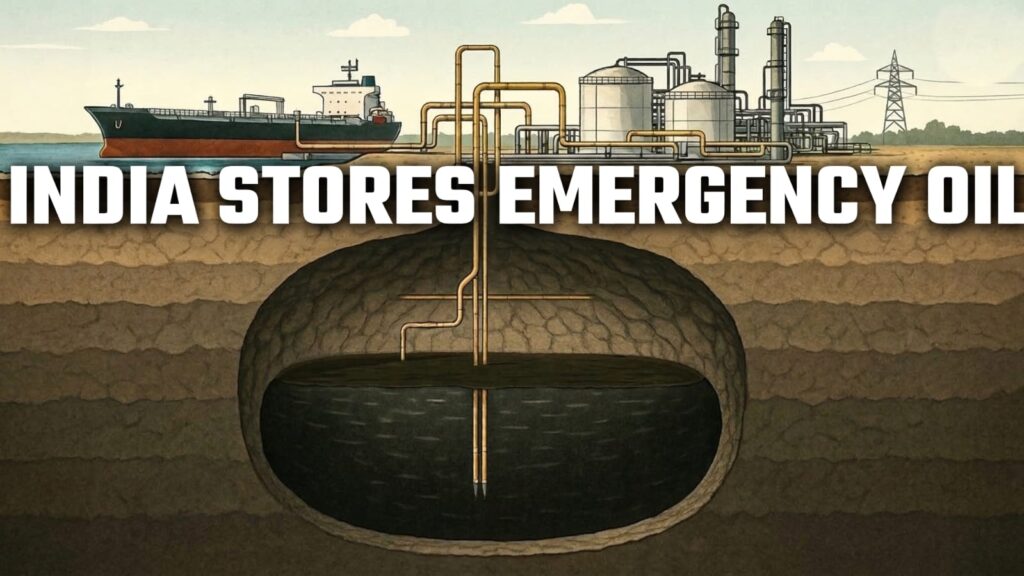
As tensions rise in the Strait of Hormuz, one question becomes critical for India—how secure is its energy supply? The country imports nearly 85% of its crude oil, much of it passing through this fragile route. But behind the scenes, India has built a strategic backup system of underground reserves and diversified oil sources. So today, let’s understand how these hidden safeguards work—and whether they are enough to keep India’s economy stable in a crisis.
Strait Of Hormuz Crisis
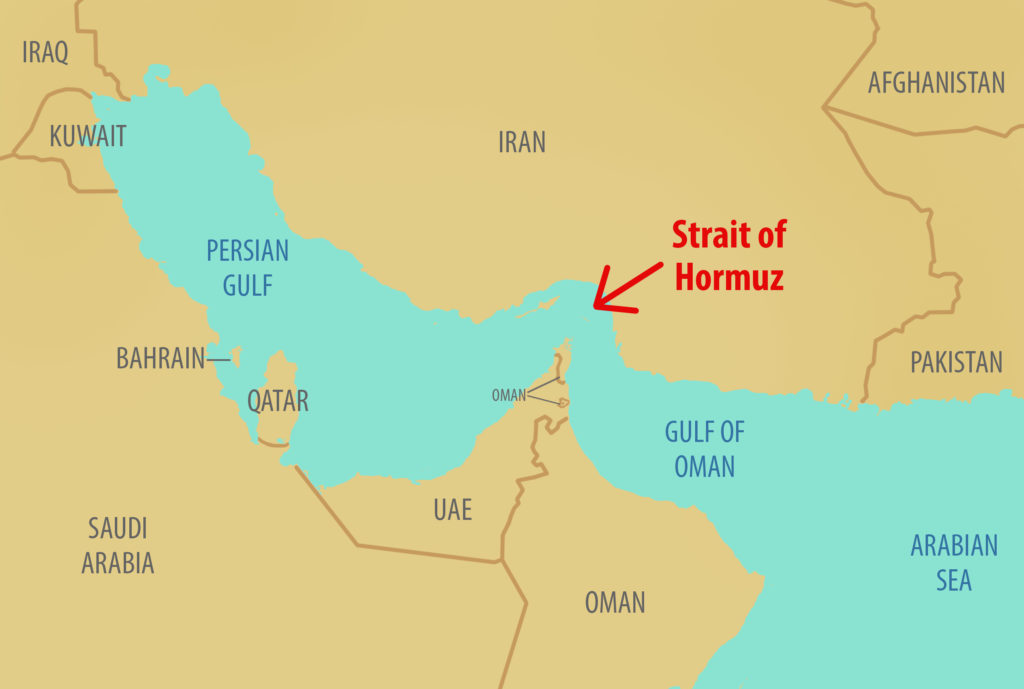
The Strait of Hormuz, located between Oman and Iran, is a narrow sea passage with a width of about 21 nautical miles at its narrowest point. Yet, its importance is massive.
According to the U.S. Energy Information Administration (EIA), around 20–21 million barrels of crude oil pass through this route every day, which is nearly 20% of global petroleum consumption. That is why it is often called the “Jugular Vein” of the global economy.
If this vein gets blocked, the world economy can face a sudden shock.
Operation Epic Fury and the Blockade of Hormuz
And on February 28, 2026 — that nightmare became real.”, when the United States and Israel launched “Operation Epic Fury” against Iran, tensions in the Middle East escalated sharply.
Just four days later, on March 4, a senior adviser of Iran’s Islamic Revolutionary Guard Corps (IRGC), Ebrahim Jabari, made a strong declaration:“Hormuz is completely closed.”His warning was clear—any vessel attempting to pass through would face naval mines and anti-ship missiles.
This threat became real when a Liberia-flagged commercial oil tanker passing near the Gulf of Oman was hit by what was described as a smart mine, causing a massive explosion in its lower section and turning it into flames.
Iran has now established full control over the northern side of this critical route.
Why This Crisis Matters for India
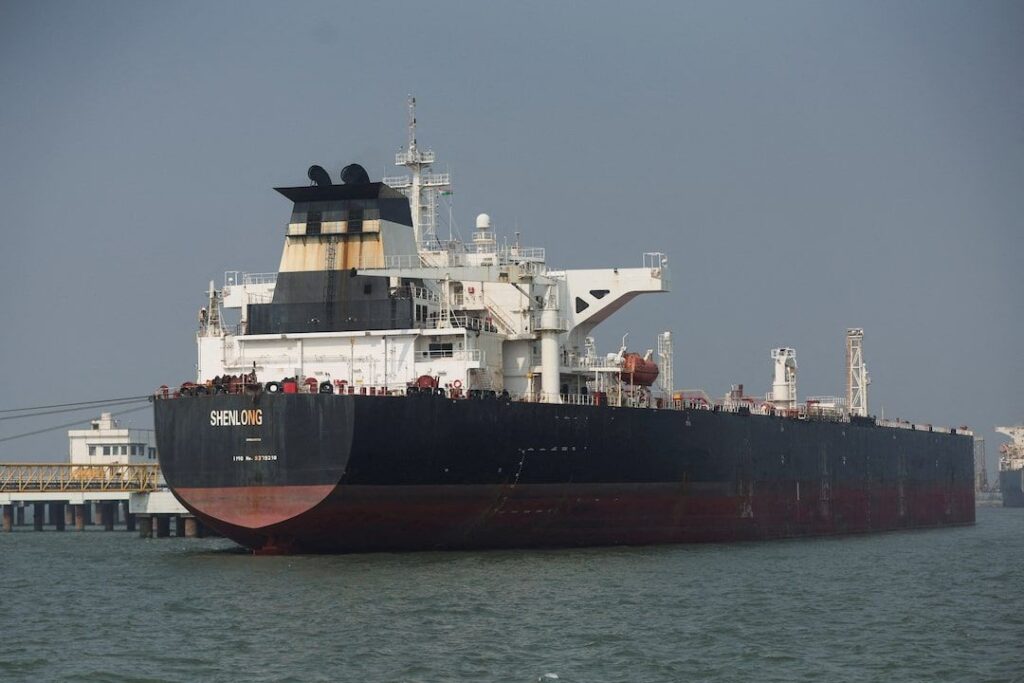
For India, this is a red alert situation. The country imports nearly 85% of its crude oil, making its energy security heavily dependent on this route. In addition, around 50% of natural gas and 60% of LPG are also imported.
This means India’s kitchens, industries, and transportation systems are all closely linked to Middle East supplies.Before the conflict, more than half of India’s crude oil came from Gulf countries like Iraq, Saudi Arabia, and the UAE—largely through the Strait of Hormuz. Now, this route is effectively disrupted.
In response, the Indian government has engaged in high-level diplomacy, including direct talks with Iran’s President Masoud Pezeshkian, to ensure the safety of energy shipments. As a result, on March 14, two Indian-flagged LPG tankers were able to pass safely through the region.
However, the safe passage of a few ships is not a long-term solution. As the conflict continues, its impact is already becoming visible in India. The key question now is—was India prepared for such a crisis?
India’s LPG and Fuel Crisis
In the early weeks of March, as tensions in the Strait of Hormuz peaked, the Indian government moved quickly to control the situation. The Petroleum Ministry stated that there was “no need to panic”, emphasizing that India had diversified its crude oil imports and reduced dependence on Hormuz. However, the ground reality appears more complex.
Rising Petrol and Diesel Prices:
Early Warning Signs Recent analyses by The Hindu and The Times of India indicate that fuel prices in major cities like Delhi, Mumbai, and Bengaluru have started showing upward pressure. When global crude oil prices remain above $100 per barrel, it typically translates into a ₹5 to ₹8 per litre impact in India over time.
LPG Crisis: The Silent Risk in Indian Kitchens
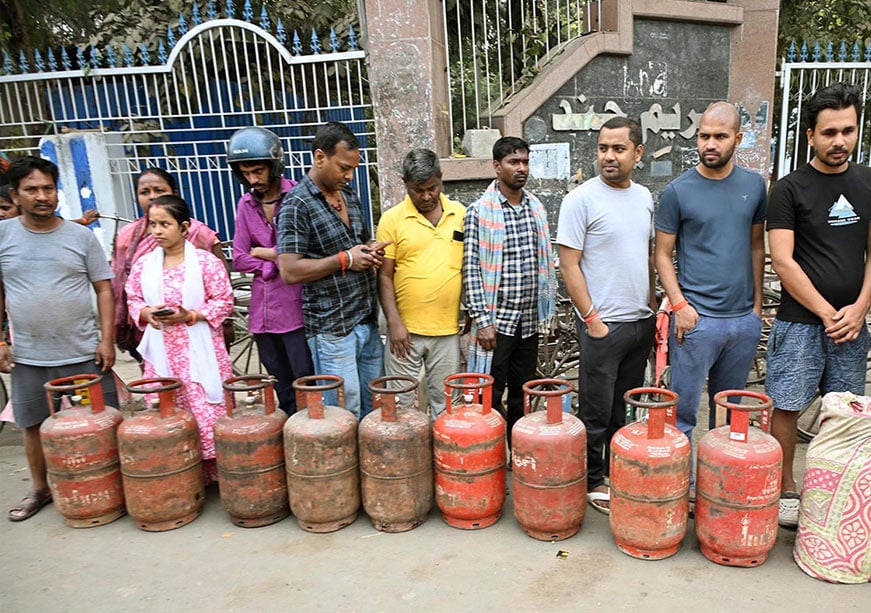
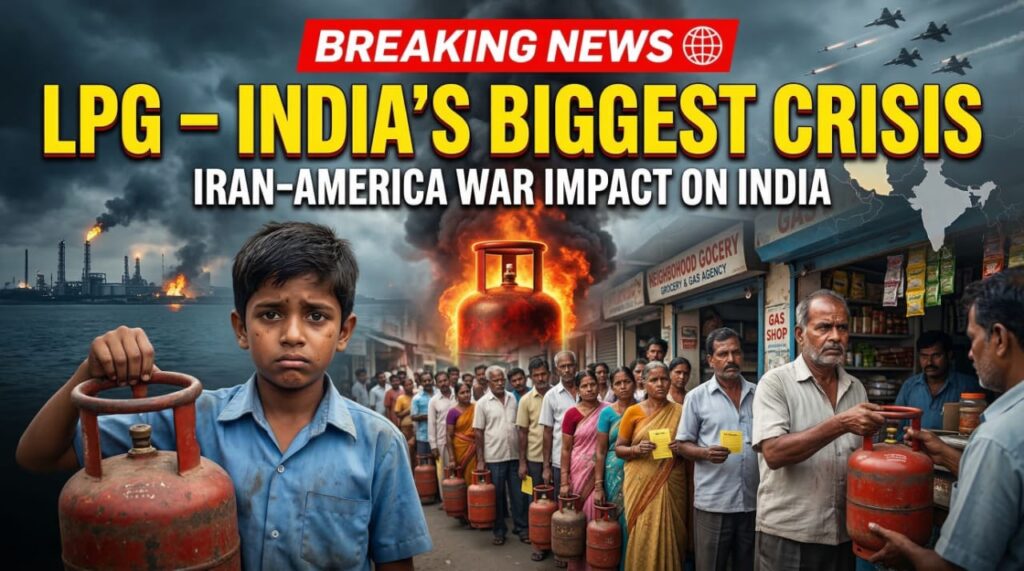
For India, the biggest concern is LPG. Today, the country has nearly 330 million domestic LPG connections. As the movement of gas tankers through the Strait of Hormuz was affected, signs of panic buying began to emerge in the market.
According to ground reports cited by The Times of India, incidents of LPG black marketing were reported in densely populated states like Uttar Pradesh and Bihar. People, driven by uncertainty, started booking extra cylinders.
In cities like Delhi, reports suggested domestic LPG cylinders being sold in the black market at prices ranging between ₹2,000 to ₹3,000.Meanwhile, in Mumbai and other major cities, supply disruptions in commercial LPG cylinders directly impacted the hotel and restaurant sector.
Several reports indicated that up to 20% of hotels and restaurants were forced to limit operations or temporarily shut down.Given the seriousness of the situation, the government had to prioritize supply through an emergency “Household vs Industry” approach.
This meant that even if industries faced shortages, ensuring that household kitchens continued to function became the top priority.If this conflict continues for a prolonged period, inflation could spiral out of control.
This raises a critical question: was India prepared for such a global shock? Did the country have a real “Plan B”?
Government assessments suggest that if the Strait of Hormuz were completely shut and oil imports from the Gulf stopped entirely, India’s existing reserves—including both government and company stocks—would be sufficient to sustain the country for only about 74 days.
India’s Hidden Backup System: Strategic Petroleum Reserves (SPR)
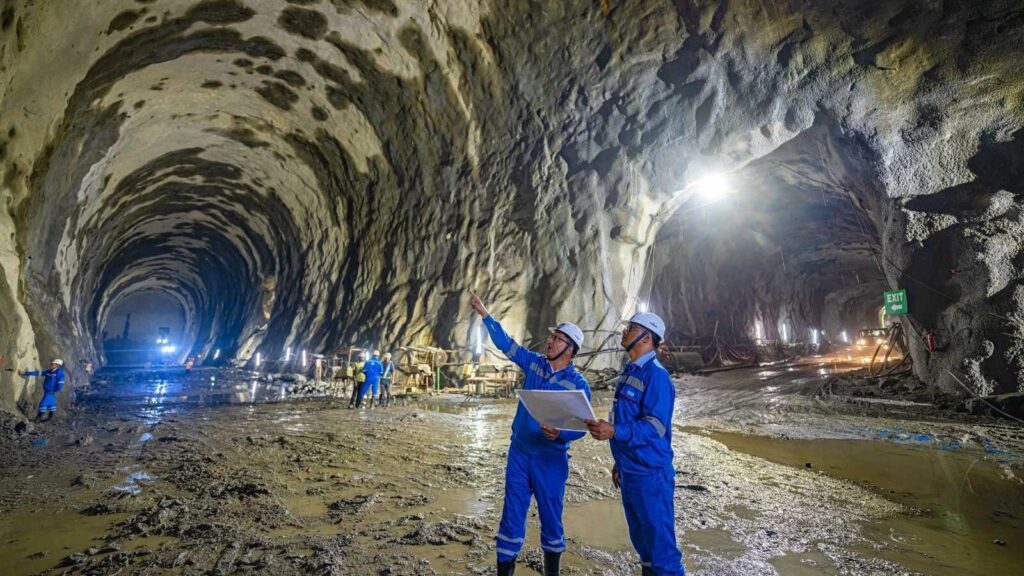
According to the International Energy Agency (IEA), countries should maintain at least 90 days of crude oil import cover to handle global supply disruptions.
This safety mechanism is known as the Strategic Petroleum Reserve (SPR). In simple terms, it acts like a country’s “emergency bank account,” where instead of money, millions of barrels of crude oil are stored. It is used only during extreme situations such as war, natural disasters, or major disruptions like a Hormuz crisis.
Why India Built SPR
India realized the need for such a reserve during the 1990–91 Gulf War. The conflict between Iraq and Kuwait triggered a severe economic crisis in India, leaving the country with only a few weeks of foreign exchange reserves and just about three days of crude oil supply.
This crisis forced policymakers to rethink India’s energy security.Since India imports over 85% of its crude oil, this heavy dependency poses a major risk. Recognizing this, the foundation for building a secure petroleum reserve system was approved during the Atal Bihari Vajpayee government in 1998, which was later implemented in phases.
When Does India Use These Reserves?
The Government of India uses these strategic reserves only in extreme situations—when international supply is severely disrupted and the country faces the risk of fuel shortages or rationing.
The decision to release these reserves is taken at the highest level, involving the Prime Minister’s Office (PMO) and the Ministry of Petroleum.
How SPR Protects the Economy
During crises like disruptions in the Strait of Hormuz, SPR acts as a “shock absorber” for the economy:
•Fuel Availability: Ensures uninterrupted supply for the military, transport, and critical industries.
•Prevents Panic Buying:** Public confidence remains stable, avoiding chaos at fuel stations.
•Price Control: When global crude crosses $100, reserve oil can be released to ease domestic price pressure.
Who Controls and Manages These Reserves?
These reserves are not controlled by private companies. They are managed by **Indian Strategic Petroleum Reserves Limited (ISPRL), a special government entity under the Ministry of Petroleum and Natural Gas (MoPNG).But the real question is… Where is this massive 5.33 million metric tonnes of crude oil actually stored? Why isn’t it kept in surface tanks?
Where Are These Underground Reserves Located?
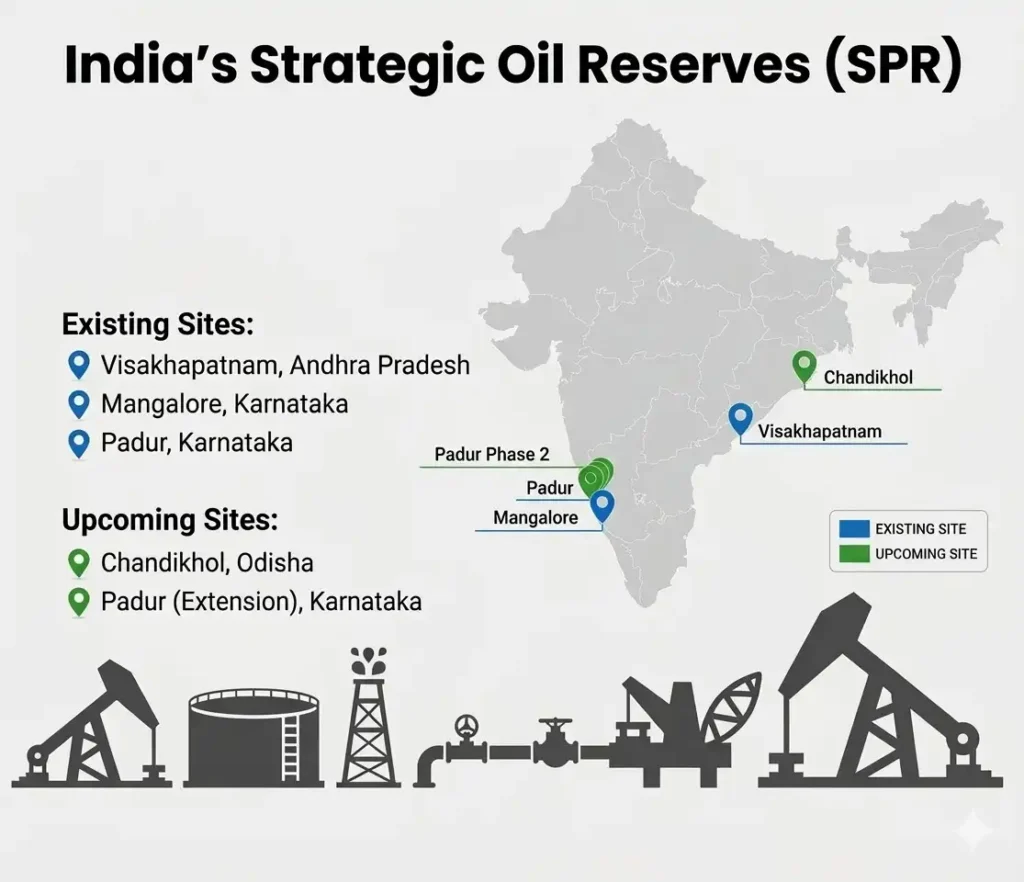
These reserves are stored deep underground, carved into massive rock caverns built within hard rock layers. Under Phase-1, Indian Strategic Petroleum Reserves Limited (ISPRL) selected three key coastal locations in South India:
– Visakhapatnam (Andhra Pradesh)
– Mangalore (Karnataka)
– Padur (Karnataka)
These locations were chosen because of their proximity to major ports.
Crude oil arriving on foreign ships is directly pumped into these underground caverns through pipelines, and from there it can be supplied to refineries when needed.
How These Underground Caverns Are Built
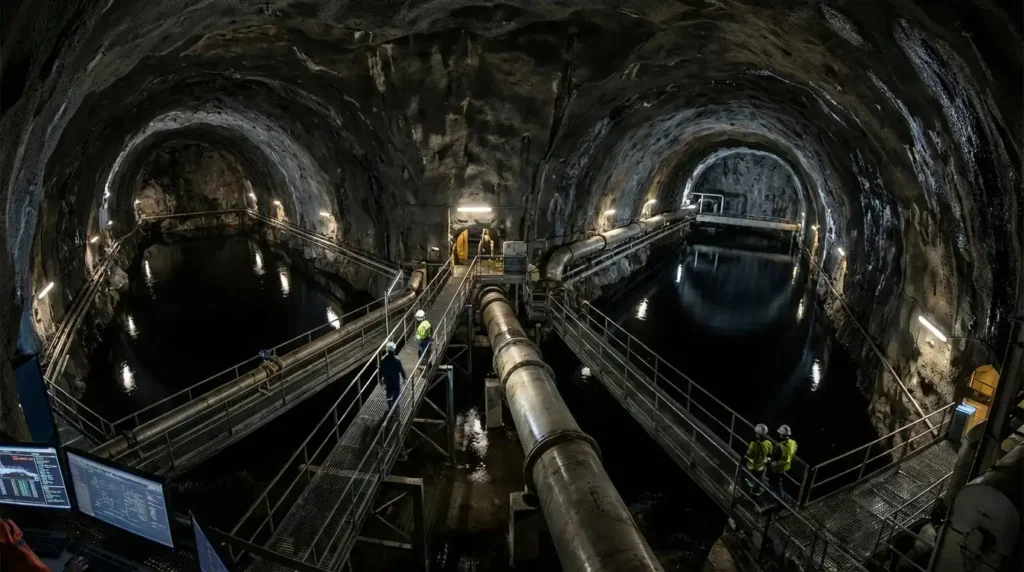
The construction of these caverns is a clear example of advanced engineering. They are built at depths ranging from about 30 to 100 meters below the surface. Engineers drill into hard igneous rock and use controlled blasting to create large U-shaped or D-shaped tunnels.
These caverns are so vast in scale that they can accommodate structures as large as multi-storey buildings.
How Oil Is Stored Inside
A natural question arises—why doesn’t the crude oil leak from these underground caverns? Why doesn’t it mix with surrounding soil or water?
This is where the hydrogeological principle comes into play. These caverns are intentionally built below the natural water table. The pressure of water present in the pores of surrounding rocks is kept higher than the pressure of the crude oil inside the cavern.
Since oil and water do not mix, and oil is lighter than water, the surrounding water forms a natural “water cushion.” This pressure acts like a protective barrier, preventing oil from leaking out and keeping it safely contained, floating above the water layer.
Why Underground Storage Is Safer
In times of war, surface-level fuel tanks become easy targets for enemy missiles or drones, as seen in the Middle East. A single cruise missile can destroy an entire reserve. In contrast, underground rock caverns located around 100 meters below the surface are considered highly secure and nearly “bomb-proof.”
This makes them far more resilient and reliable during geopolitical conflicts.
How Other Countries Prepare for Oil Crises
India’s Real Strength
So, how much oil does India actually store in these underground reserves?Under Phase-1, ISPRL has built a total storage capacity of **5.33 million metric tonnes (MMT)** across three locations: – Visakhapatnam: 1.33 MMT – Mangalore: 1.50 MMT – Padur: 2.50 MMT In total, this equals roughly **38 million barrels of crude oil** stored inside these secure caverns.During a crisis like a complete disruption in the Strait of Hormuz, this reserve alone can supply India with uninterrupted energy for about 9–10 days.When combined with the commercial stocks held by oil marketing companies (around 64–65 days), India’s total backup reaches nearly 74 days.
But the real question is— if global supply is fully disrupted, are these 74 days enough for a country of 1.4 billion people?
United States (USA) — The Undisputed King
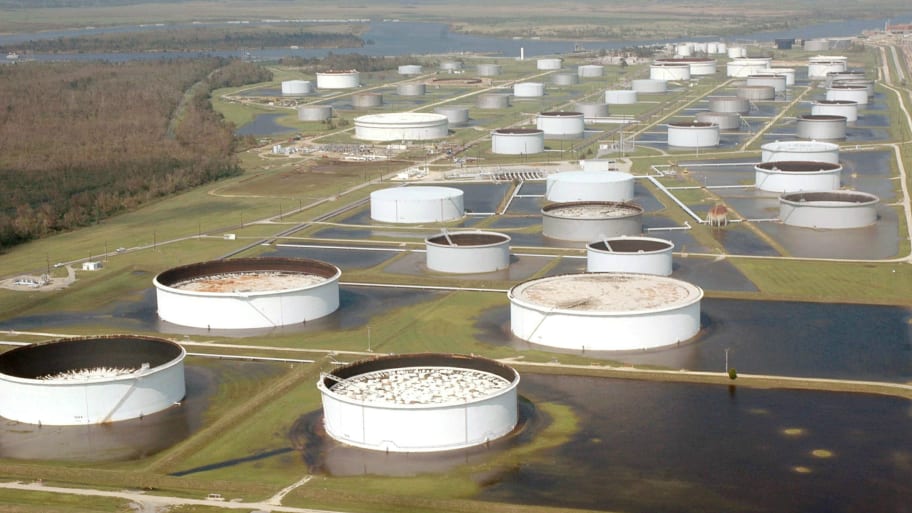
When it comes to strategic oil storage, the United States leads the world. Its Strategic Petroleum Reserve (SPR) is stored in underground salt caverns along the coasts of Texas and Louisiana
Capacity: Around 714 million barrels — the largest emergency reserve in the world, capable of supporting the country for months during supply disruptions.
China — The Silent Stockpiler
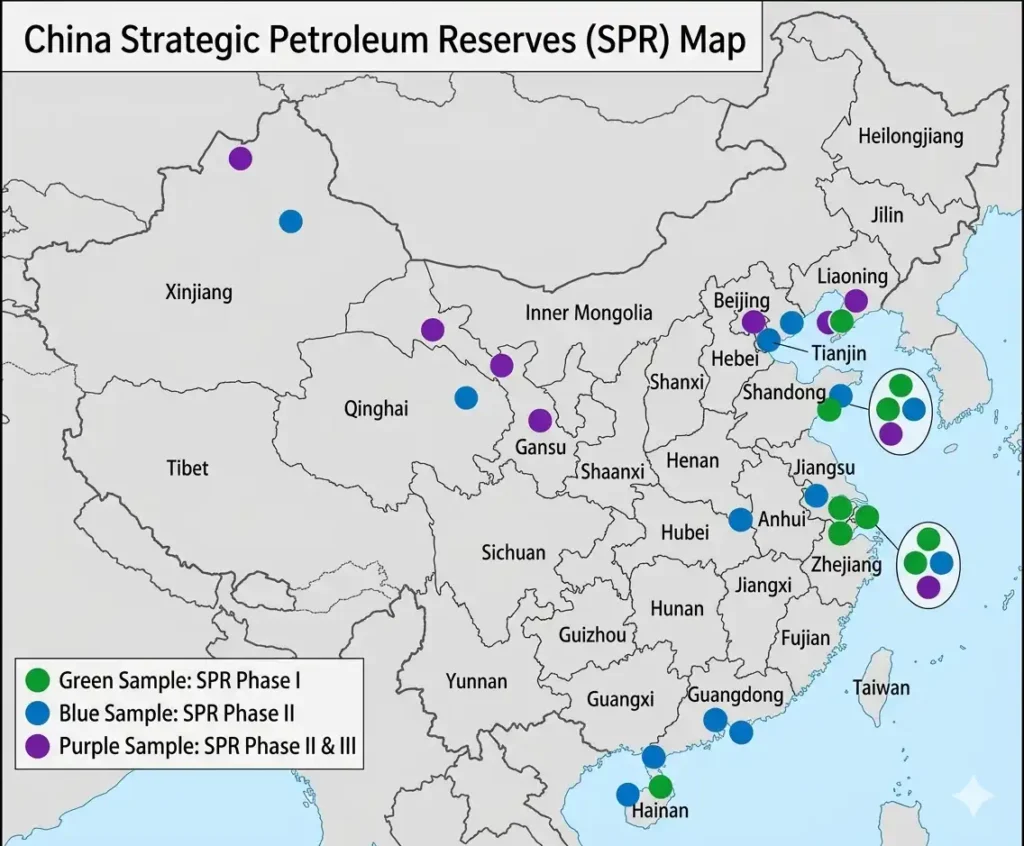
China does not publicly disclose full details of its strategic reserves. However, according to global commodity trackers, it has significantly increased its stockpiles in recent years—especially during the 2020 oil price crash and the Russia–Ukraine war—by purchasing discounted crude.
Capacity: Estimated to be over 400–500 million barrels. Backup: Roughly 90–100 days of import cover, giving China strong resilience against geopolitical shocks.
Japan — The Ultimate Survivor
Japan is an island nation with almost no domestic oil resources. It imports nearly 96% of its crude oil — almost entirely from the Middle East. (Al Jazeera) After the oil shocks of the 1970s, Japan quietly built one of the world’s strongest reserve systems.As of December 2025, Japan holds 254 days of total oil reserves — combining 146 days in government storage, 101 days with the private sector, and 7 days in joint reserves. In total: 470 million barrels. That is more than three times India’s 74-day buffer — from a country that produces almost no oil of its own.
India’s Long-Term Plan
The current crisis in the Strait of Hormuz has exposed India’s biggest vulnerability—its heavy dependence on Middle Eastern oil. For years, more than 60% of India’s crude imports came from Gulf nations like Iraq, Saudi Arabia, and the UAE. Recognizing this risk, India has steadily restructured its energy strategy and diplomacy to reduce overdependence and strengthen long-term energy security.According to global energy trackers like Vortexa and reports by Reuters, before 2022, Russia accounted for less than 2% of India’s total oil imports. But after the Russia–Ukraine war, India started purchasing discounted Russian crude.As a result, Russia quickly became India’s largest oil supplier, with its share rising to around 35–40% during 2023–24.
Although this has recently moderated to about 20–35%, Russia remains one of India’s key suppliers.This strategic shift has helped India cushion the impact of Middle East disruptions while saving billions in foreign exchange.
At the same time, India has expanded its supply network by increasing imports from the United States, Nigeria, and Brazil, further diversifying its energy sources.
Green Energy Shift
Strategic reserves and discounted oil provide only short-term relief. The real solution lies in India’s transition towards green energy and technology.
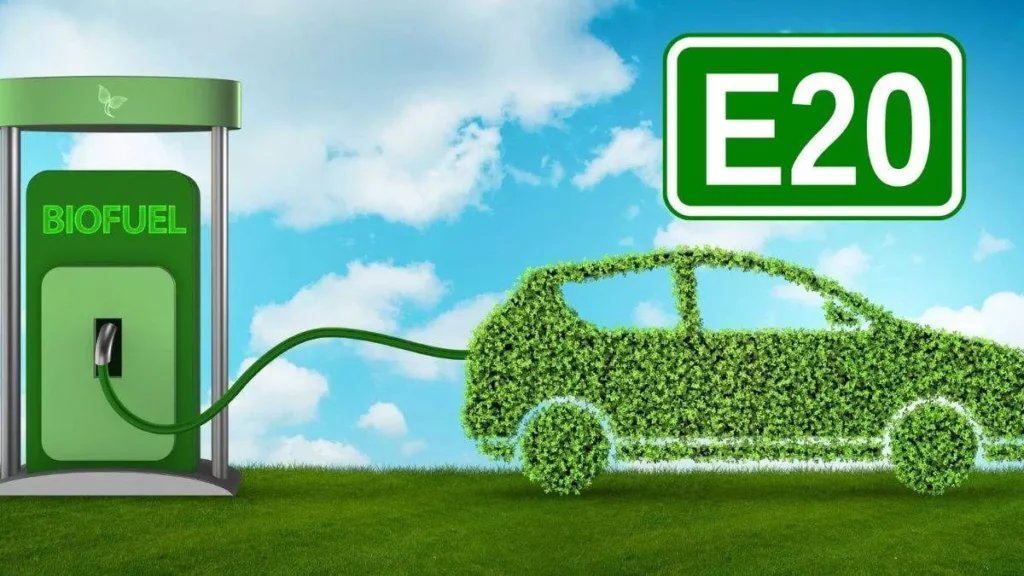
1. E20 Program (Biofuel Strategy):
India has already achieved 10% ethanol blending ahead of schedule, saving over ₹24,000 crore annually in foreign exchange. The country is now moving towards E20 (20% blending), which will further reduce import dependence.
2. Electric Vehicles
Government data shows that more than 1.5 million EVs are being added every year. Through schemes like FAME, India is steadily reducing its dependence on petrol and diesel.
3.Renewable Energy Target:
India aims to achieve 500 GW of power capacity from non-fossil fuels (solar and wind) by 2030, marking a major step toward long-term energy security. Do you think India is moving fast enough? Drop your thoughts in the comments below.
- 100 Million Jobs in Danger? India’s AI Future Explained
 In November 2022, ChatGPT crossed 100 million users in just 2 months.Since then, AI is growing at a rapid pace. By 2030, up to 100 million jobs in India could be at risk.The real question is — could yours be next? What AI Really Is (Not What You Think) Most people hear the term “Artificial… Read more: 100 Million Jobs in Danger? India’s AI Future Explained
 - Climate Change 2030: What Will Happen to Your Life in India?India is no longer waiting for climate change to arrive. It is already here.You can feel it in the air, in the water shortages, and even in the rising cost of food.What once sounded like a distant scientific warning is now becoming a part of everyday life for over 140 crore Indians.The data makes this… Read more: Climate Change 2030: What Will Happen to Your Life in India?
- Water Crisis 2030: How India Is Quietly Running Out of WaterToday, we open the TV or scroll through news on our phones every day…and everywhere we hear the same kind of headlines—sometimes India-Pakistan tensions, sometimes wars, and sometimes political turmoil.But amidst all this noise, there is a crisis that is silently growing—India’s water crisis.According to a report by NITI Aayog,by 2030, groundwater in 21 major… Read more: Water Crisis 2030: How India Is Quietly Running Out of Water
- Why Does America Always Stand With Israel? The Real Reasons Nobody Tells YouFebruary 28,2026 When the United States and Israel launched a joint attack against Iran, it was not just a military operation—it was a clear message to the world:“Israel’s security is America’s own security.”But this is where the real question begins—Why is a global superpower willing to risk so much for a relatively small country? If… Read more: Why Does America Always Stand With Israel? The Real Reasons Nobody Tells You
- How India Stores Emergency Oil: Inside Secret Underground ReservesAs tensions rise in the Strait of Hormuz, one question becomes critical for India—how secure is its energy supply? The country imports nearly 85% of its crude oil, much of it passing through this fragile route. But behind the scenes, India has built a strategic backup system of underground reserves and diversified oil sources. So… Read more: How India Stores Emergency Oil: Inside Secret Underground Reserves





👍👍👍👍
👍👍