
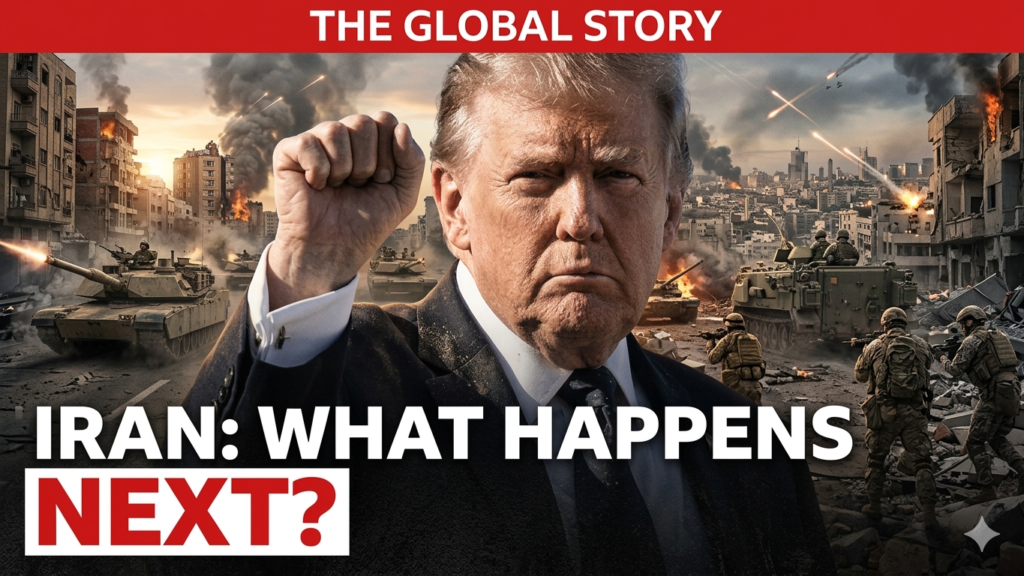
February 28,2026 When the United States and Israel launched a joint attack against Iran, it was not just a military operation—it was a clear message to the world:“Israel’s security is America’s own security.”But this is where the real question begins—Why is a global superpower willing to risk so much for a relatively small country?
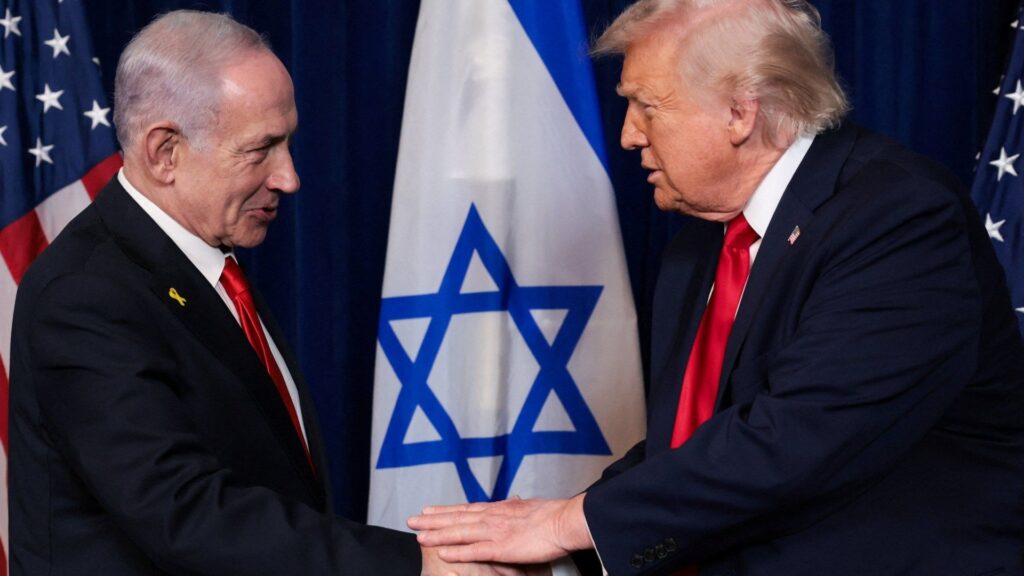
If we look at the data, the picture becomes clearer:In 2022, the United States provided around $3.3 billion in military aid to Israel under its long-term Foreign Military Financing (FMF) program.After October 2023, this support increased significantly.
According to a report by Brown University’s Costs of War Project,the US has provided at least $21.7 billion in military aid to Israel between October 2023 and 2025. And it’s not just about money…
According to The Wall Street Journal, after the Gaza conflict, the US supplied Israel with thousands of bombs, artillery shells, and advanced bunker-buster weapons.But the real power is not just weapons—the United States also acts as Israel’s strongest diplomatic shield.
After October 2023, when international criticism over the Gaza war reached its peak,the US repeatedly used its veto power in the United Nations Security Council to protect Israel.
History shows this clearly:From 1951 to 2022, the United States has provided over $300 billion in aid to Israel—making it the largest cumulative recipient of US assistance in the world.
So the real question is—Why is the world’s biggest superpower willing to take such risks for a small country?Is this just about security and friendship… or is there a deeper equation involving global power, oil, and strategy?
The Beginning — A Nation Born from Ashes and the 1948 “Masterstroke”
If we want to understand the depth of the US–Israel relationship, we have to go back to its roots.1. World War II & Holocaust:

The foundation of this strong support did not begin with politics, but with the circumstances of that time.During World War II, Nazi Germany under Adolf Hitler carried out the Holocaust, in which around 6 million Jews were brutally killed.
When the war ended and the horrifying images of Hitler’s concentration camps came to light,a strong wave of sympathy for Jews spread across the world.
Inside the United States, public opinion strongly supported Jewish refugees.There was a growing sense of moral responsibility among both the public and leaders—that the persecuted Jews needed a safe homeland of their own, a “Jewish Homeland.”
1948 Creation of Israel: America’s Immediate Recognition
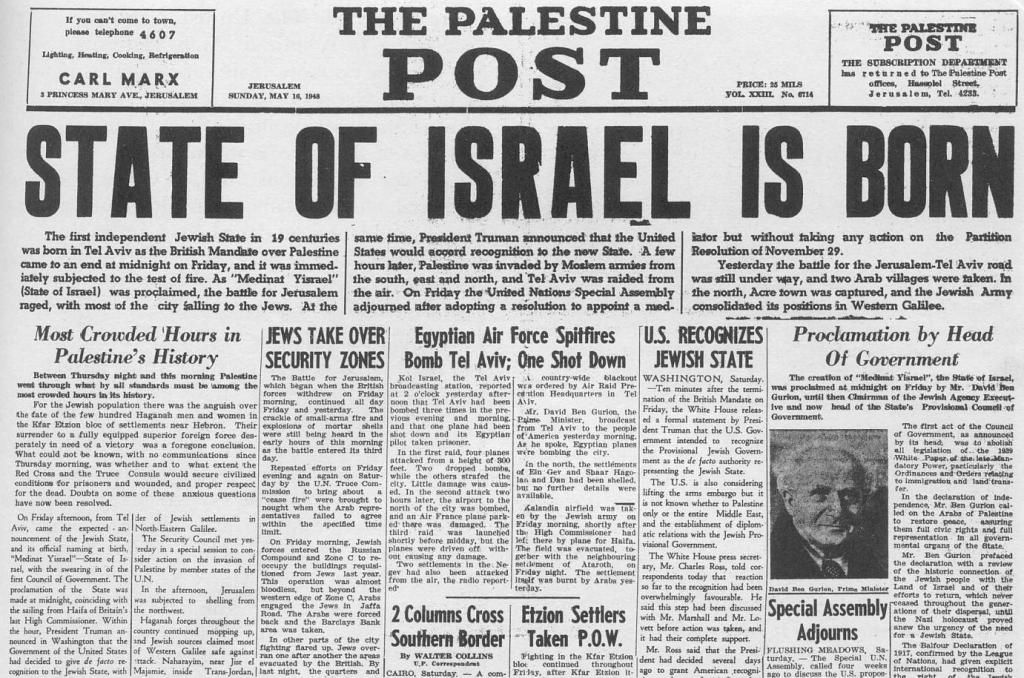
Amid this strong emotional and political support, on May 14, 1948, Jewish leader David Ben-Gurion officially declared the creation of a new state called Israel.Just 11 minutes after this declaration, US President Harry S. Truman recognized Israel as an independent nation.
The world’s most powerful country became the first to formally accept Israel’s existence.This was not just a diplomatic formality—it was a clear message to the world that Washington now stood firmly behind Israel.
Cold War Begins: Stalin’s ‘Red Threat’ and Middle East Oil
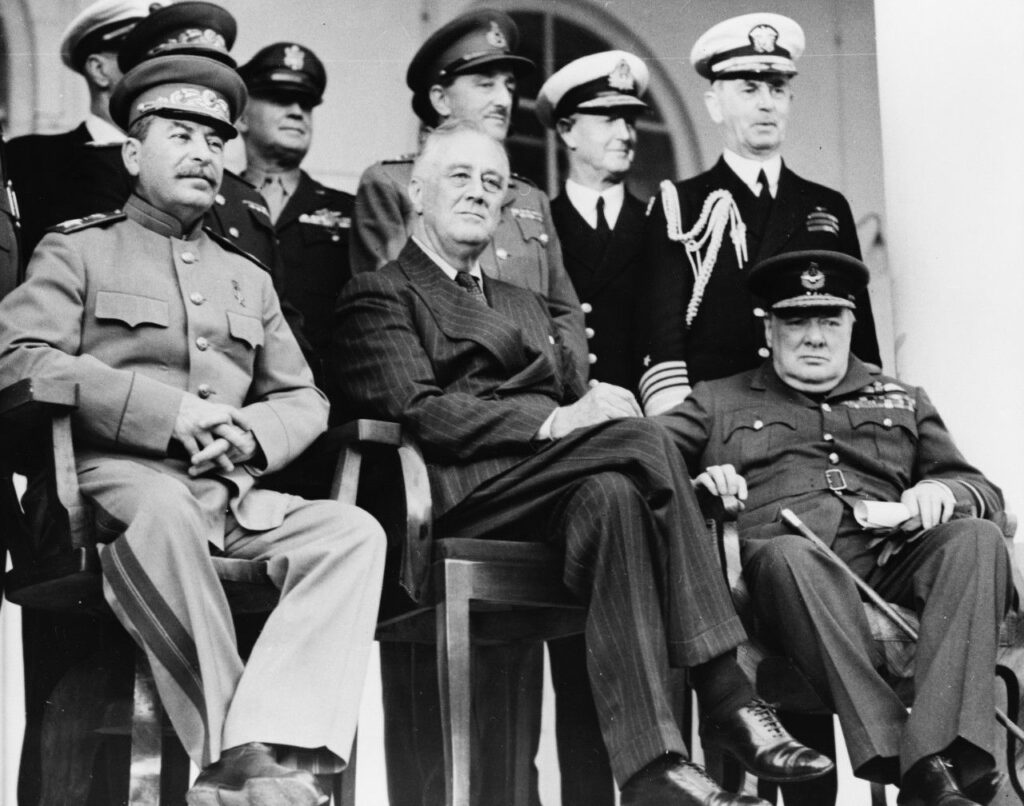
But in geopolitics, emotions alone are never enough. After 1948, the world was rapidly changing. World War II had ended, and a new conflict had begun—the Cold War between the United States and the Soviet Union (USSR), as both sides tried to build their own global alliances.
The Middle East soon became one of the most important battlegrounds in this rivalry.
Why?Because beneath this region lay some of the world’s largest oil reserves, and it also served as a critical Choke point connecting Europe and Asia.At that time, Soviet leader Joseph Stalin was expanding his influence in the region.
The USSR began supporting rising Arab nationalism in countries like Egypt, Syria, and Iraq, while also supplying them with weapons.The United States clearly saw the risk—if the Middle East fell under Soviet influence, control over global oil could slip away from the West.
In this situation, the US needed a reliable partner within the region—one that aligned with Western democratic values and could counter Soviet influence effectively.Israel fit perfectly into this role.
Early Conflicts & Growing Military Ties (1956–1965)
In the early years, the United States was cautious about directly supplying weapons to Israel, mainly to avoid angering Arab nations.

However, the 1956 Suez Crisis changed this thinking.When Egyptian President Gamal Abdel Nasser (who was close to the Soviet Union) nationalized the Suez Canal, Israel, along with Britain and France, launched an attack on Egypt.Although US President Dwight Eisenhower eventually forced a ceasefire,the crisis made one thing clear to Washington—the Middle East could erupt into conflict at any time.
After this, during the 1960s—especially under President John F. Kennedy—military and intelligence cooperation between the US and Israel began to grow rapidly.For the first time, the United States supplied Israel with Hawk anti-aircraft missiles, marking the beginning of direct military support.But the real turning point in this relationship was still yet to come…
Cold War Strategy — How Israel Became America’s ‘Unsinkable Aircraft Carrier’
By the mid-1960s, the Cold War had reached its peak.The Soviet Union (USSR) had armed major Arab countries like Egypt and Syria with modern weapons, and US influence in the Middle East was under serious threat.But then, a war in the region changed everything—and for the US, it became an opportunity.
1967 Six-Day War: Israel’s Shocking Victory
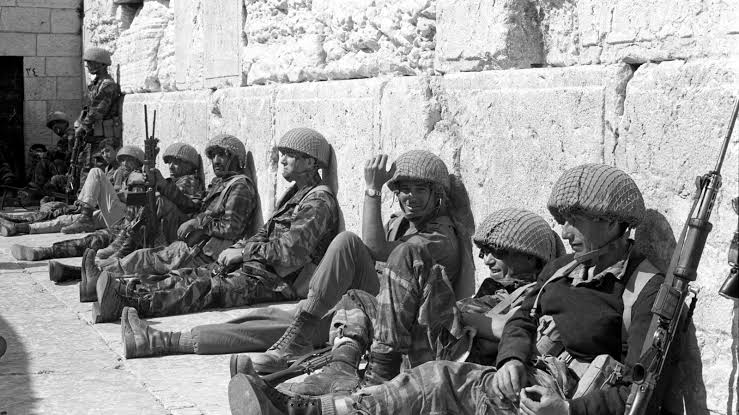
June 5, 1967.The armies of Egypt, Syria, and Jordan were positioned along Israel’s borders, ready for war.But before they could strike, Israel launched a pre-emptive attack and destroyed Egypt’s entire air force on the ground within hours.The war lasted just six days.
In that short time, Israel not only defeated the combined forces of three countries but also captured large territories from them.This victory shocked the world—and deeply influenced decision-makers in Washington.
The United States saw how a small country had defeated Soviet-backed Arab armies with remarkable speed and efficiency.Before 1967, Israel’s main arms supplier was France.But during the war, France imposed an arms embargo on Israel to maintain its relations with Arab nations.
As France stepped back, the United States quickly seized the opportunity.Washington realized that to maintain a lasting presence in the Middle East, it needed to turn Israel—its strongest regional rival to Arab states—into a permanent strategic base.Soon after the war, the US began supplying Israel with F-4 Phantom fighter jets and advanced military radar systems, ensuring that Israel’s military and technological edge stayed ahead of its neighbors.
1973 Yom Kippur War: The Alliance Is Sealed
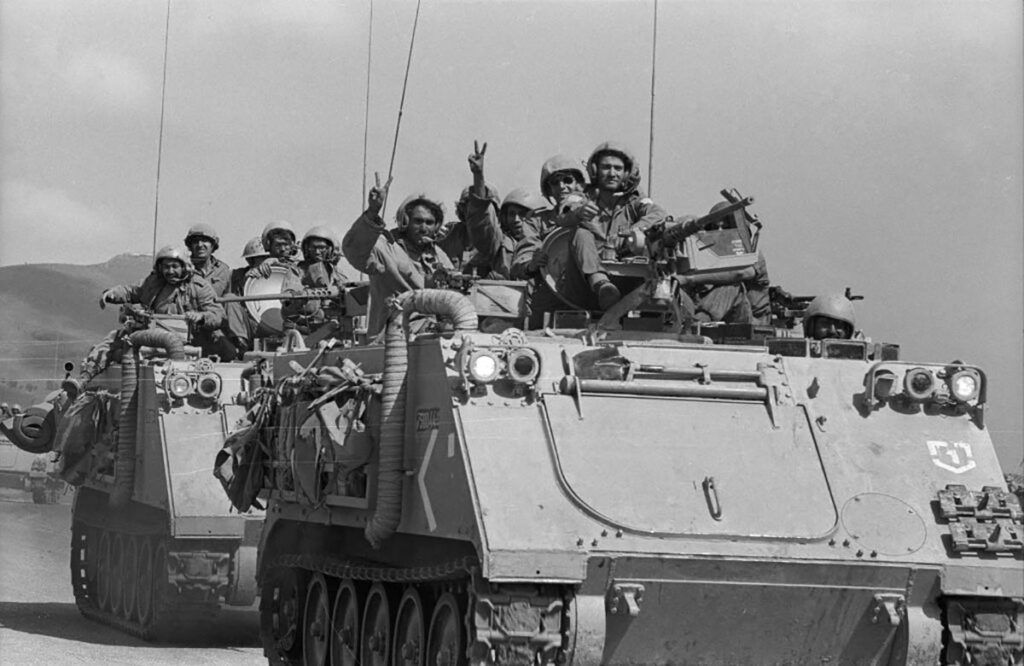
If 1967 marked the beginning of this partnership, the 1973 war made it truly ironclad.In October 1973, on the holiest day in Judaism—Yom Kippur—Egypt and Syria launched a surprise attack on Israel to reclaim their lost territories.
In the initial phase of the war, Israel was under heavy pressure and running out of weapons.It was one of the biggest threats to its very existence.At that moment, US President Richard Nixon made a historic decision.He launched “Operation Nickel Grass”—one of the largest emergency weapons airlifts in history
American cargo planes flew non-stop, day and night, delivering thousands of tons of tanks, ammunition, and artillery directly to the battlefield.This massive military support turned the tide of the war and prevented Israel from defeat.
From that point on, Israel effectively became America’s “unsinkable aircraft carrier” in the Middle East.But the story did not stop at weapons alone—there were deeper factors that further strengthened the US–Israel relationship.
The Power of Petrodollar and the Oil Game (The Hidden Layer)
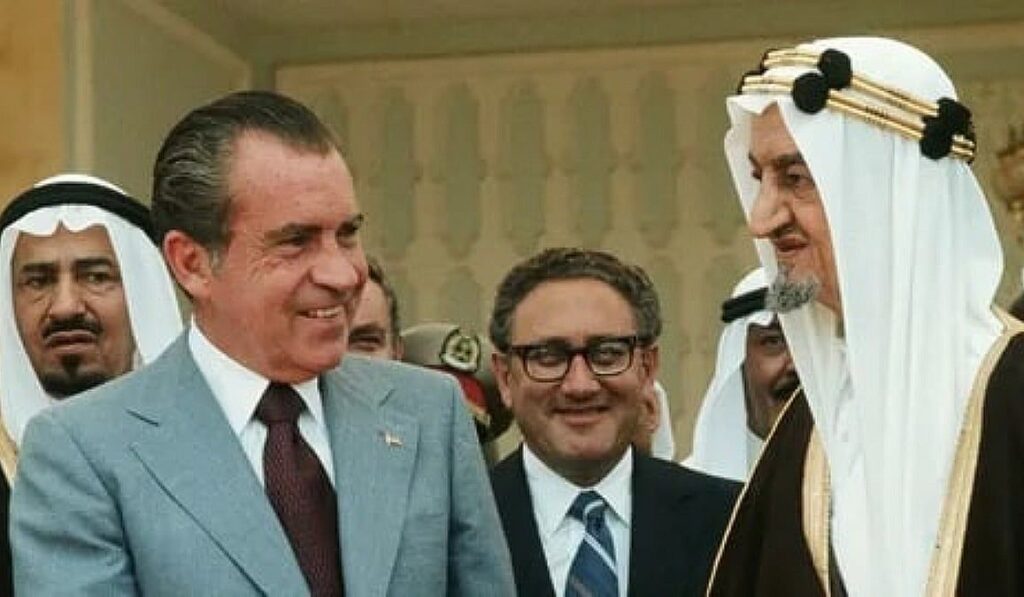
In 1974, US President Richard Nixon and Secretary of State Henry Kissinger made a historic deal with the Saudi royal family.The agreement was simple—the United States would provide full military protection and weapons to Saudi Arabia, and in return, Saudi Arabia would sell its crude oil only in US dollars.
- This marked the birth of the “Petrodollar” system in global economics.
This single deal changed the entire global equation.Now, any country in the world—whether India or Japan—needed to first hold US dollars in order to buy oil.This system turned the dollar from just a currency into a global power tool.
It became one of the strongest mechanisms through which the United States could influence the global economy.
Why Control Over the Middle East Matters for the US
The world’s largest oil reserves lie beneath the sands of the Middle East.The US strategy was clear—if Washington maintained influence over this region, it could indirectly control the global economy.The United States had two key objectives:Ensure a continuous and stable supply of crude oil to the world Maintain the dominance of the petrodollar system However,
in such an unstable region—constantly affected by conflicts—the US needed a stable and reliable ally that would never switch sides.That is why Israel became a kind of strategic guarantee for the United States—helping protect its economic and geopolitical interests in the region.
Military Power and Intelligence
This relationship is not just about fighter jets and missiles—it is a strategic alliance protected even by US law.
The Ultimate Legal Guarantee: Qualitative Military Edge (QME)
A key pillar of US foreign and military policy is Israel’s “Qualitative Military Edge (QME)”In simple terms, this means that Israel’s military power and technology must always remain one step ahead of other countries in the Middle East.
According to US law, Israel must have the capability to defeat any regional coalition on its own in a conventional war. This is why:
- Whenever the US sells weapons to Arab countries, it first ensures that Israel’s QME is not Weakened the US Congress is required to review and report on this Regularly and Israel remains the largest recipient of Foreign Military Financing (FMF)
The Testing Ground: From Iron Dome to F-35
A large part of Israel’s military strength is built on US support.The Iron Dome is not just an Israeli system—it has been developed with significant American funding and technology.Israel was also the first country to receive the advanced F-35 stealth fighter jet from the United States.
After the Iranian missile attacks in 2024, the US deployed its THAAD defense system in Israel—and even sent its own troops to operate it.All of this clearly shows how important Israel is to the United States.
Politics, Lobbying, and Hollywood — How Israel Shapes Influence in the US
Support for Israel in the United States is not just a government policy;it is a narrative built over decades through lobbying, funding, and soft power—deeply embedded in American society.This influence operates mainly at three levels: politics, religion, and media (Hollywood).
The Political Machine: The Power of AIPAC In US politics
, there is an unspoken reality—if you want to win elections, speaking against Israel becomes difficult At the center of this influence is AIPAC (American Israel Public Affairs Committee).It is not just a lobbying group, but a powerful political network that supports pro-Israel candidates and weakens critics.
In the 2024 elections, AIPAC and its affiliated Super PAC, United Democracy Project, spent around $95 million,mainly to help pro-Israel candidates win.
The Religious Vote Bank: The Influence of CUFI Support for Israel in the United States is not only political—it is also deeply connected to religion.CUFI (Christians United for Israel) is a large organization with millions of members, representing evangelical Christians.Their support is based on religious beliefs.They believe that a strong Israel is connected to biblical prophecy.
This is one of the reasons why both major US political parties—Republicans and Democrats—tend to maintain a supportive stance toward Israel.—
Hollywood and the Power of Narrative beyond politics and religion, Israel has also strengthened its image through Hollywood.For decades, films have helped shape a narrative that influenced public opinion in Western countries in favor of Israel.
The 1956 film “The Ten Commandments” presented Jewish history in a grand and religious way.
The 1960 film “Exodus” shifted public sympathy strongly toward Israel—portraying Jews as victims, while Arabs were often shown in a negative light.This pattern continued over time.
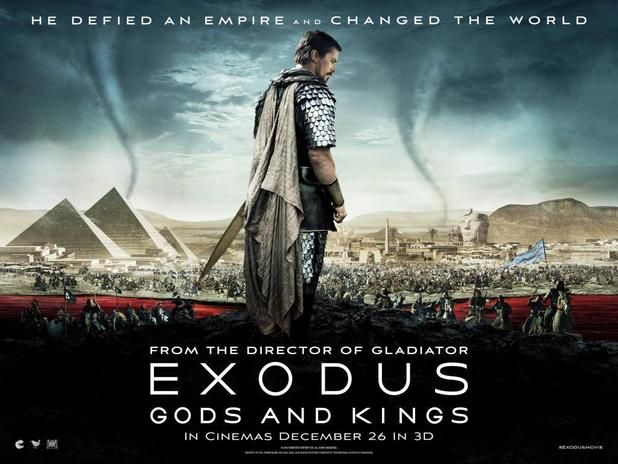
In the 2013 film “World War Z,” Israel is shown as a secure fortress, a place where humanity can survive. Impact:This narrative gradually shaped people’s subconscious,establishing Israel as a symbol of safety and protection.
This narrative gradually shaped people’s subconscious,establishing Israel as a symbol of safety and protection.
The Future — Will This Unbreakable Alliance Ever Change?
Today, the biggest challenge for the United States is China.China is not just using diplomacy—it is expanding its influence across the Middle East.In 2017, China established a naval base in Djibouti, and it is developing major projects like the $50 billion Gwadar Port in Pakistan.
At the same time, in 2024, major regional powers such as Saudi Arabia, Iran, and the UAE joined the China-influenced BRICS group.These countries are now exploring oil trade in Chinese yuan instead of relying on the US dollar.As the petrodollar system weakens,the United States increasingly needs a strong and reliable partner in the region—and Israel becomes that “last secure stronghold.”
The India Angle
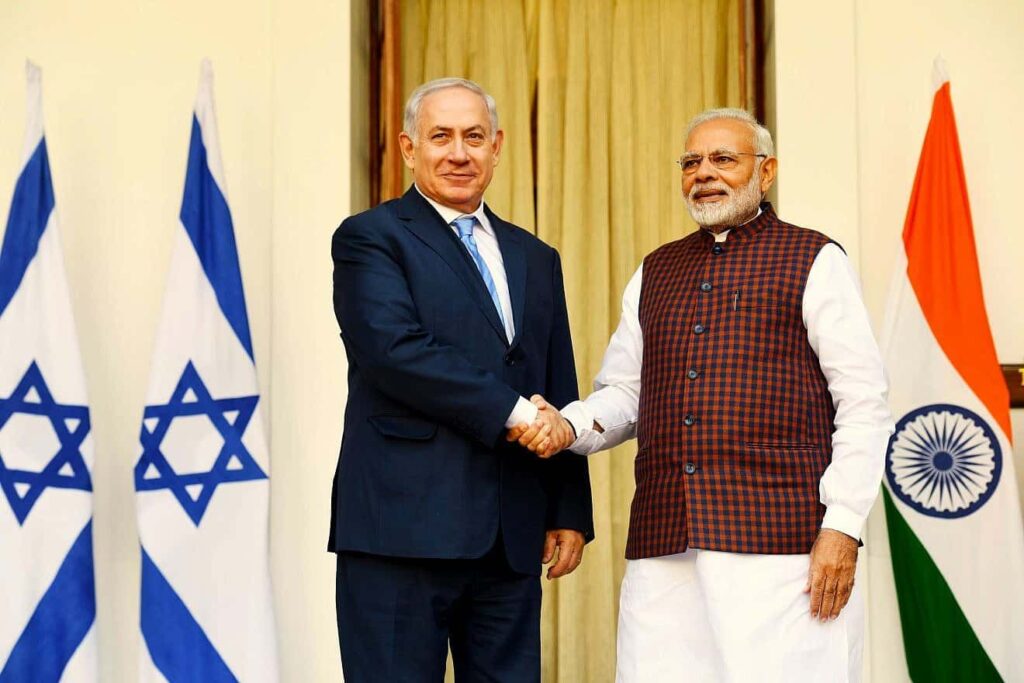
As tensions in the Middle East continue to grow, India is closely observing this entire geopolitical situation.Analysts believe that the strong US–Israel partnership is not a threat to India, but a major strategic advantage.The Biggest Defense Pipeline according to data from SIPRI (Stockholm International Peace Research Institute),between 2020 and 2024, India purchased around $20.5 billion worth of defense equipment from Israel.Today, India is the largest buyer of Israeli weapons, accounting for about 34% of Israel’s total arms exports.Since Israel’s military technology is supported by the United States under its Qualitative Military Edge (QME),India indirectly gains access to some of the world’s most advanced and battle-tested technologies.
Operation Sindoor (May 2025)
The impact of this technology is also visible on the battlefield.In May 2025, during India’s Operation Sindoor against Pakistan,Israeli military drone technology played a pivotal role.
IMEC: India’s Global Gateway this partnership is not limited to defense.The ambitious IMEC (India–Middle East–Europe Economic Corridor), which connects India to Europe, passes through Israel.For this global trade route to remain secure,a strong Israel—backed by US support—becomes highly beneficial for India’s economic interests
Rising Questions Within the United States Despite external threats and growing partnerships with countries like India,the biggest challenge to the US–Israel alliance is now emerging from within the United States itself.Social media has disrupted the narrative that had been built over decades.
Recent surveys by YouGov and The Economist indicate that around 60% of Americans support an immediate ceasefire in Gaza.
At the same time, public opinion toward Israeli Prime Minister Benjamin Netanyahu remains relatively low, with only a minority of Americans expressing support.This clearly suggests thata growing section of the American public—especially younger generations like Gen Z—is becoming more critical of the government’s strong support for Israel.
In geopolitics, there are no permanent friends or enemies—only interests.Time will decide whether this alliance grows stronger or begins to change.
What do you think? Share your opinion in the comments.

100 Million Jobs in Danger? India’s AI Future Explained
In November 2022, ChatGPT crossed 100 million users in just 2 months.Since then, AI is…
Climate Change 2030: What Will Happen to Your Life in India?
India is no longer waiting for climate change to arrive. It is already here.You can…
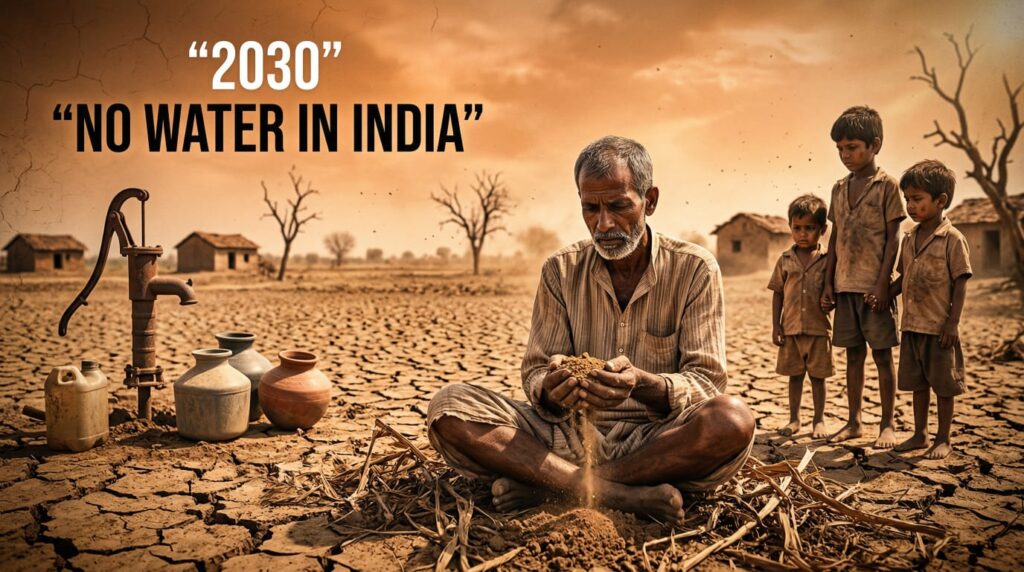
Water Crisis 2030: How India Is Quietly Running Out of Water
Today, we open the TV or scroll through news on our phones every day…and everywhere…
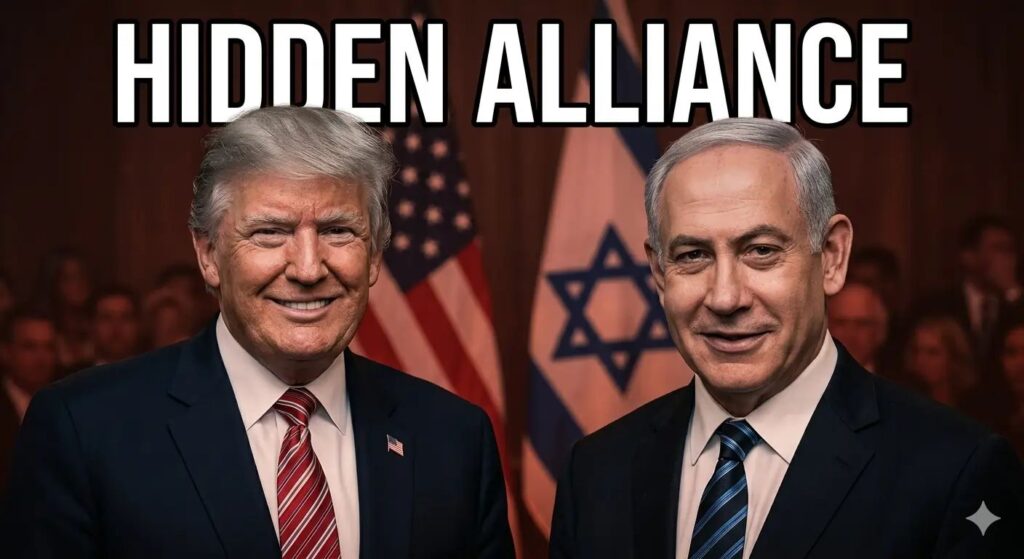
Why Does America Always Stand With Israel? The Real Reasons Nobody Tells You
February 28,2026 When the United States and Israel launched a joint attack against Iran, it…
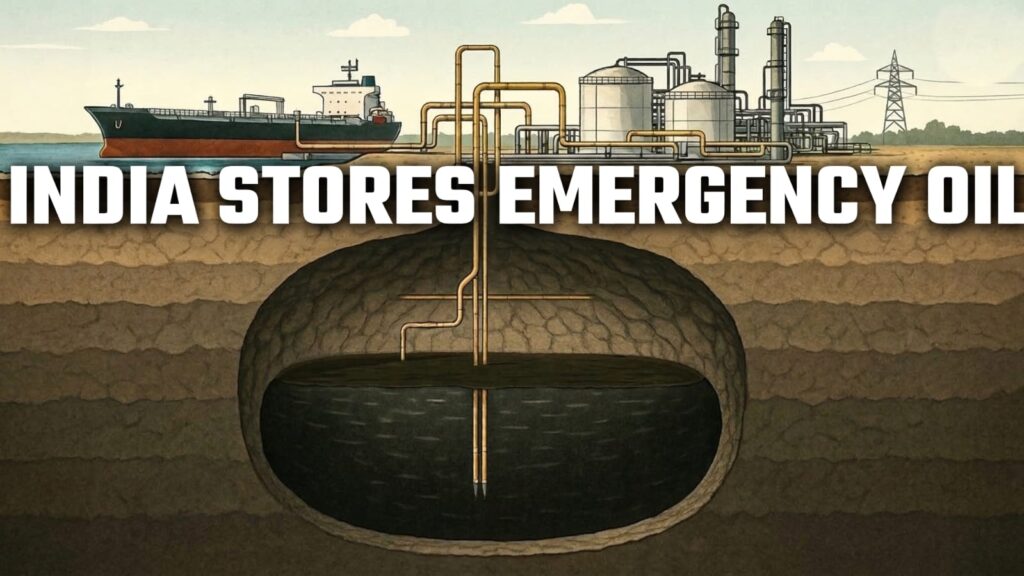
How India Stores Emergency Oil: Inside Secret Underground Reserves
As tensions rise in the Strait of Hormuz, one question becomes critical for India—how secure…
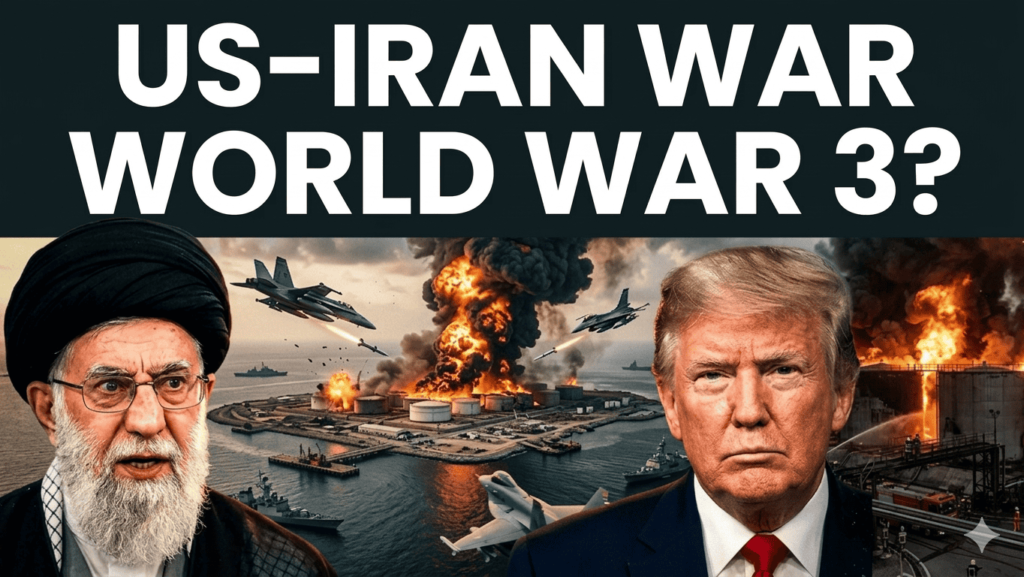
US–Iran War Explained: Could This Spark World War 3?
February 28, 2026 — that night, Oman’s Foreign Minister told the world that peace was…
Hii good